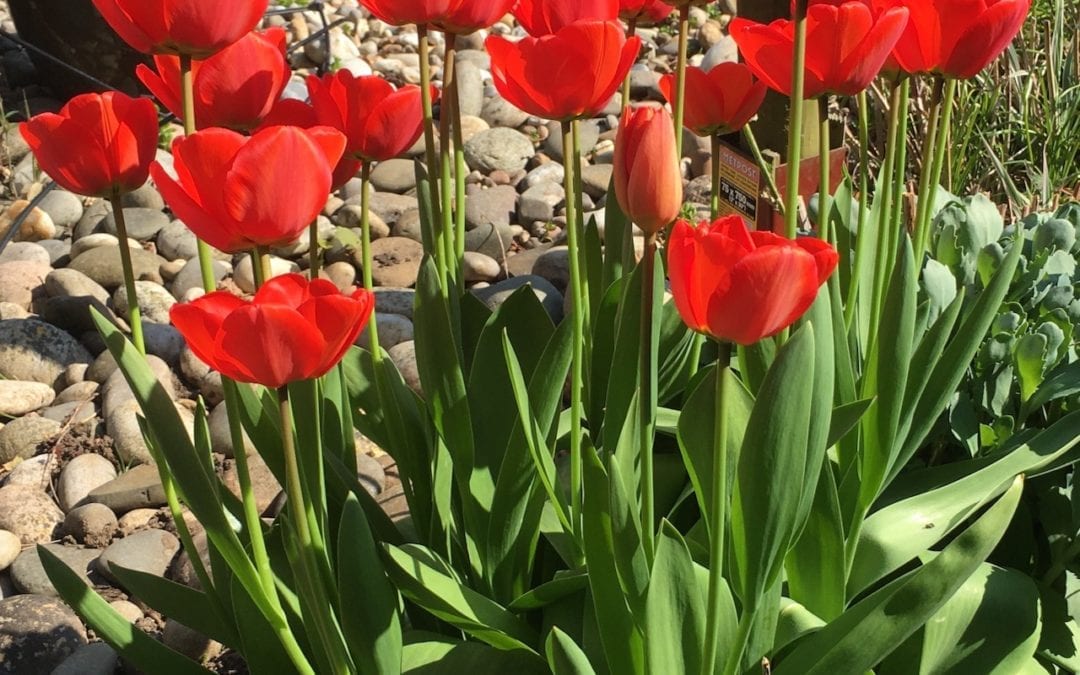
Flowers in May

Flowers in May

Here are photographs of nine garden or wild plants that were in flower during May in central England. The weather during this period has been mainly sunny with very little rain. Dates when photographs were taken are in brackets.
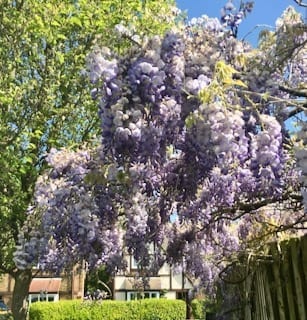
Wisteria

Chinese Wisteria Wisteria sinensis is a popular climbing plant native to China, introduced to Britain in 1816. (May 5)

Red Valerian

Red Valerian Centranthus ruber.  Introduced from Southern Europe in the 17th century, it has escaped from gardens and can now be found in walls, banks and waste places throughout Britain. (May 16)

White Campion

White Campion Silene latifolia is a native wild flower found throughout Britain in hedgerows and waste places. (May 18)

Yellow Iris

Yellow Iris Iris pseudacorus is a native wild flower that grows by water throughout  Britain. (May20) 
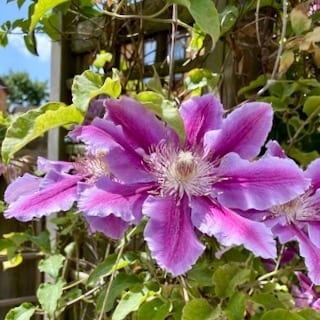
Clematis Dr Ruppell

Clematis Dr Ruppel is a hybrid introduced to Britain in 1975  (May 20)

Cow Parsley

Cow Parsley Anthriscus sylvestris is the first roadside umbellifer in spring and is a very common native wild flower. It dominates roadside edges from April into June. (May 21)
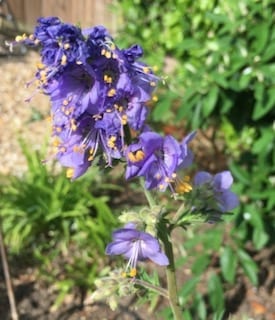
Jacob's Ladder

Jacob’s Ladder Polemonium caeruleum  is native to Britain but is also grown in gardens. (May 21)
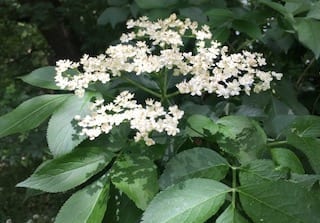
Elder flower

Elder Sambucus nigra is a  shrub or small tree which grows in hedgerows and woods throughout Britain. (May 24)

Peony flower

Garden Peony cultivar based on Paeonia lactiflora introduced to Britain in the 18th century from China. (May 27)
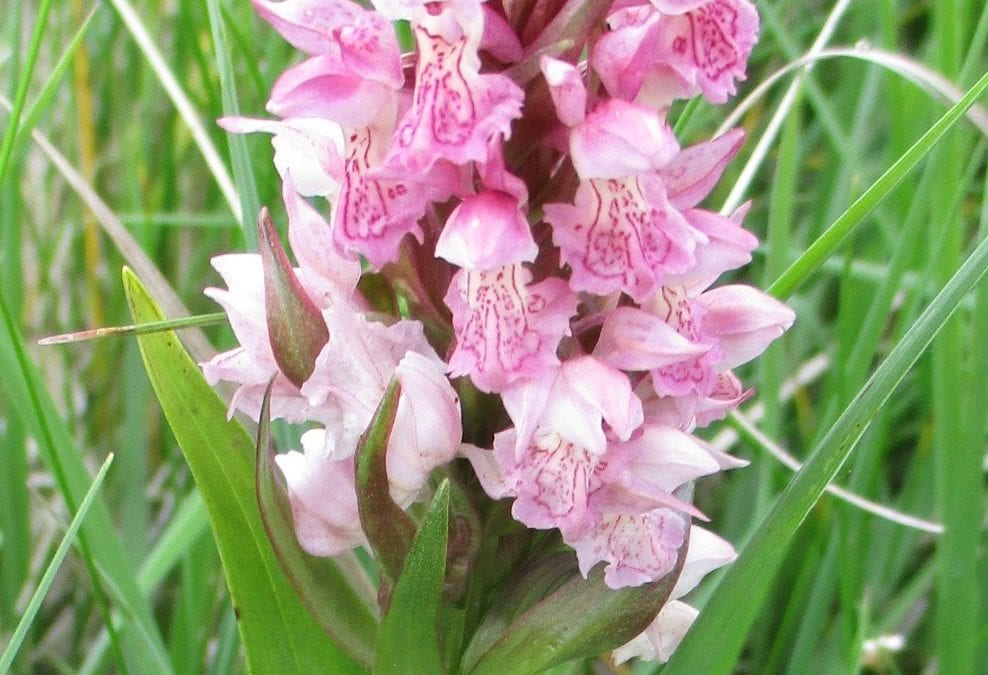
Orchids in May

Orchids in May

Here are 4  wild Orchids to look out for in May. Orchid flowers are complex and have unique flowering parts and an amazing method of pollination. Orchid flowers have 6 tepals in two whorls. The 3 outer tepals enclose the flower. There are 2 inner tepals that enclose the reproductive parts and one, called the labellum, which is enlarged and may be prolonged backwards into a spur. The labellum forms the landing pad for pollinating insects. The reproductive parts consist of the pollinia, rostellum and stigmas arranged in a vertical structure called the column. In orchids pollen grains are fused together into a long club-shaped structure called a pollinium (plural pollinia) and transported whole by the pollinator.

green-winged orchid flower

Here are the flowering periods for the four orchids described.


Early Purple Orchid Apr-Jun
Common Spotted Orchid May-Aug
Green-winged Orchid May-Jun
Early Marsh Orchhid May-Jun
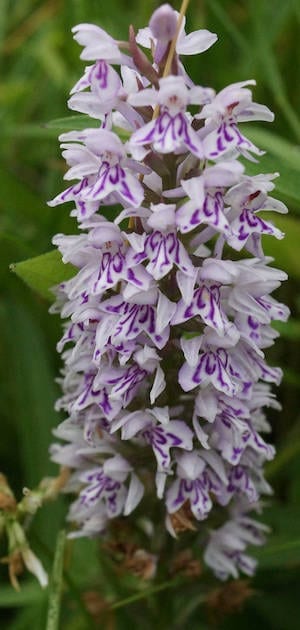
common spotted orchid

The Common Spotted Orchid Dactylorhiza fuchsii is the most common orchid in Britain. It is found on grasslands and in woods. It is relatively tall, up to 50cm. It flowers from mid May to early August. and grows from a root tuber. Identified by its spotted leaves, it has a slight scent but, like all species in the Dactylorhiza genus, produces no nectar in its spur. It is pollinated by bees and flies. It has 2 pollinia which stick to the head of the pollinator as it attempts to access the spur. By the time the insect reaches the next flower the pollinia stick out horizontally and touch the sticky stigmas located below the rostellum on the upper side of the entrance to the spur.

early purple orchid

The Early Purple Orchid Orchis mascula flowers from April to June.These photographs were taken in woodland in April. The orchid is short, 15 to 40 and the leaves are spotted. The labellum has an extension at the back into a long spur (shown in the centre below) which does not provide nectar. The labellum is 3-lobed. One ‘sepal’ and 2 ‘petals’ form a hood (bottom right) over the column which has 2 pollinia and 2 stigmas. The pollinating bee lands on the labellum  and inserts its proboscis into the spur. As it does so one or both of the brown pollinia shown sticks to its head. As the bee flies to the next flower the pollinia swing forward through 90 degrees so that when the bee lands on the next flower the pollinia strike the sticky stigmas located below the rostellum on the upper side of the throat of the spur. The spur provides  no nectar so this is an example of food deception which puzzled Darwin.

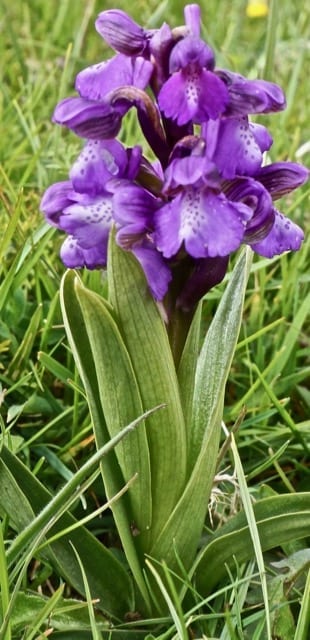
green-winged orchid

The Green-winged Orchid Anacamptis  morio  is found throughout Britain in meadows and pastures. It is short, usually less that 20 cm in height. It grows from a tuber and flowers in May and June. It has a purple labellum and a purple helmet with green veins. It has a spur which does not contain nectar and so practices food deception. It has a scent which attracts social and solitary bees. One theory is that food deception may result in fewer visits by pollinators but increase the chance of pollen arriving from another plant and hence reduce inbreeding.

early marsh orchid

The Early Marsh Orchid Dactylorhiza incarnata flowers from late May to late June in damp grassland and marshes throughout Britain. It is up to 40cm in height. It has no scent and produces no nectar but deceives inexperienced pollinators such as bumblebees, possibly because it is found in remote marshy areas where there are few rewarding flowers for pollinators. It grows from a root tuber and occurs widely across Eurasia as far as Siberia.

Fritillary

Fritillary

Here are 2 Fritillary species that flower in April and May.  One is a wild flower, the other is a garden favourite. The Fritillary genus Fritillaria has over 100 species. It is in the Lily family.

Snake’s Head Fritillary Fritillaria meleagris is a wild flower native to Europe and western Asia.  It was cultivated as a garden ornamental in Tudor Britain but was not recorded growing wild until 1736. It normally grows  in damp meadows but elsewhere may have escaped from gardens. The common name ‘Snake’s Head’ refers to its snake-like drooping flower head.  The word ‘fritillary’ refers to the flower’s chess board pattern and is also used as the common name for a group of butterflies.  

Crown Imperial Fritillaria imperialis ‘Maxima Lutea’ is a cultivar commonly planted in gardens in Britain. It was introduced in the 16th century from Turkey where it is found in the same areas as the original species of Crown Imperial Fritillaria imperialis.

The Snake’s Head Fritillary flower, like all members of the Lily family, has 6 tepals, a term used when the sepals and petals look the same. The flower secretes nectar at the base of each tepal. The flower is visited by early-flying bumblebees in April and May.

The Crown Imperial flowers are protandrous (anthers shed pollen before the stigma is receptive) and have nectaries (at the base of the tepals). They are pollinated by bees and wasps and, in Britain, by Blue Tits and Great Tits. 

This flower has been opened up probably by a squirrel. The 3-lobed style is longer than the stamens and the stigma is receptive before the anthers release pollen. The bumblebee is its most effective pollinator. Flowers last 6 to 7 days. Pollen, carried by bees on their thorax, is deposited on the extended stigma. When the anthers release pollen, bees seeking nectar climb up the tepals and get pollen on their thorax and wings.

 A mixed group of purple and white fritillary in a damp woodland.

Trees mid April

Trees mid April

Trees photographed during one week in mid April in an urban setting in Central England. Maximum daytime temperature has been 19c with long sunny periods, no overnight frosts and hardly any rain. Ash is just coming into leaf. Oak leaves appeared around April 14th.

Domestic Apple April 17

Japanese Flowering Cherry April 21st

Rowan April 23rd

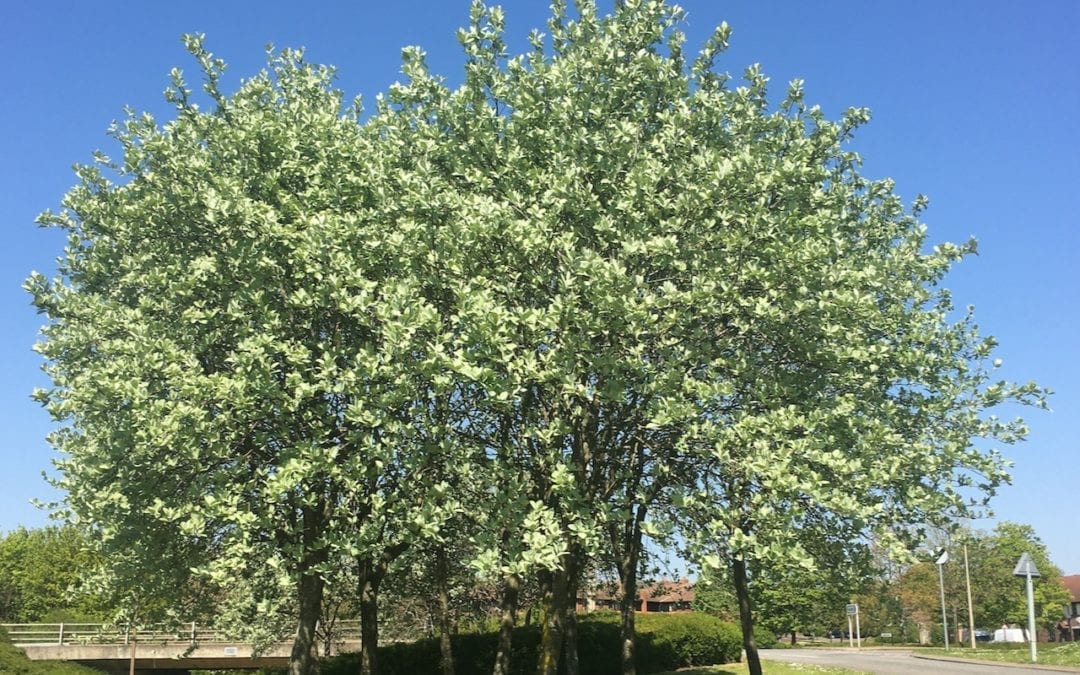
Whitebeam April 22nd

Bird Cherry April 21st

Broad-leaved Lime April 23rd

Hybrid Black Poplar female catkins April 21st

Ash tree leaves April 22nd

White Poplar April 22nd

Bluebells and Wild Garlic

Bluebells and Wild Garlic

Bluebells and Wild Garlic  are in flower now in many woodlands. The two species often grow in the same wood but hardly ever grow together. They form large clumps and out-compete one another. Wild garlic comes into leaf earlier than bluebell and so may have a  competitive advantage. Bluebells need more light than wild garlic and so like the dappled light of a woodland before the tree canopy shades the ground.  The presence of Bluebells and Wild Garlic is an indicator that the woodland has existed for a very long time.

The two species are members of different families. Bluebells are members of the Asparagus family which has 114 genera and 2900 species and includes Agave, Camassia, Hosta, Yucca,  Asparagus,  Hyacinth, Grape hyacinth, Bluebell, Squill and Star of Bethlehem. Wild Garlic is an allium ( similar to the garden alliums)  and is a  member of the  Daffodil family – which has1600 species including Alliums, Agapanthus,  Snowdrop, Snowflake, Nerine, Belladonna Lily and Daffodil. 

mid April central  England

Despite their beauty, bluebells, unlike wild garlic,  are poisonous and contain about 15 biologically active compounds to defend themselves from animals and insect pests. 


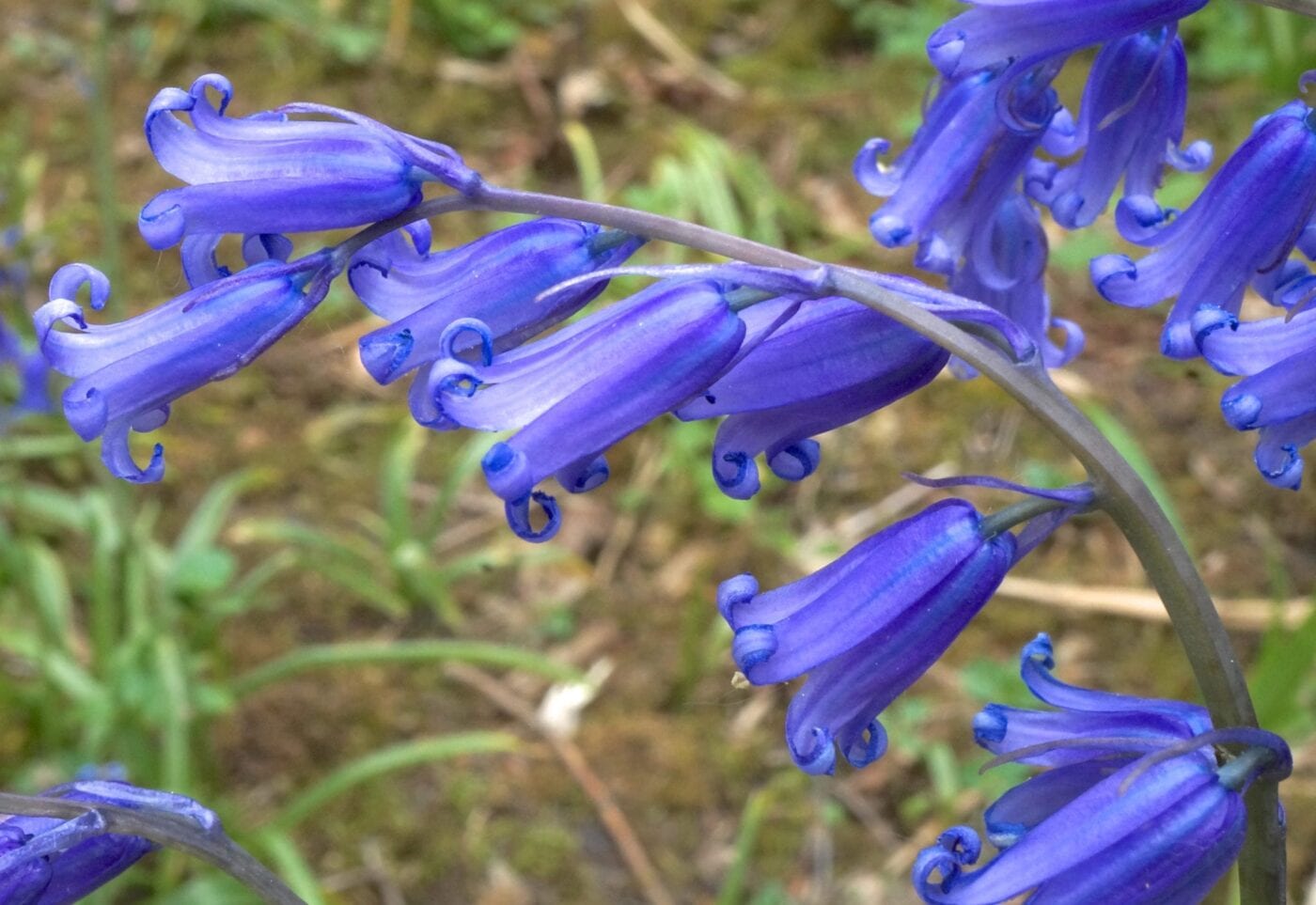
Bluebells are common in woods throughout Britain in spring. flowers are arranged on a one-sided, drooping shoot (raceme). The flower has 6 blue tepals , 6 Stamens and 1 style which is attached to a green superior ovary (see photo below).  Bees and other insects are attracted by nectar secreted from glands in the ovary wall.  Honey-bees steal nectar by pushing their tongues between the base of the tepals. 

This photo shows the superior, green ovary with an erect pale blue style, topped by a receptive stigma. Four of the 6 stamens are shown loaded with yellow pollen. 3 stamens are short and three long. The 6 blue tepals are fused into a tube. To avoid self-pollination it is thought that the  female stigma is fertile before the male anthers release pollen. 

mid May Lake District

The leaves and flowers of the Wild Garlic are edible.  Leaves appear in March and are best picked when young.  They give off a strong smell of garlic  when crushed. The plant, native to Britain, is also known as Bear leek, Bear’s garlic, Broad-leaved garlic, Buckrams, Ramsons and Wood garlic. In continental Europe, the bulbs are thought to be a favourite food of brown bears, hence the plant’s scientific name Allium ursinum. Ramsons is an old english word for garlic. 


Flowers in mid May

Ramsons Allium ursinum is a native wild flower found throughout Britain in damp woods and shady places. Also known as Wild Garlic. The flowers emerge from April to June. The flowers are arranged in the form of an umbel with multiple flowers coming from a single point. Each flower has a 3-lobed green ovary, 6 white tepals and 6 anthers. They are pollinated by small insects.

By mid-June the fruits have formed. 

The fruits contain seeds. Some farmers now collect the seeds and sell them to gardeners. In woodlands the plants usually spread by bulb division and so form large clumps but can regenerate from seed.

April trees and flowers

April trees and flowers

The abnormally sunny and warm weather has brought on flowering and leaf formation in many species. Here is a selection of trees and flowers noted in April 2020. In some tree species, such as the Weeping Willow, Dwarf Cherry and Japanese Flowering Cherries, the flowers form before the leaves but in others, such as the Horse Chestnut, the leaves emerge before the flower buds have opened.

Japanese Flowering Cherry ‘Amanogawa’

Weeping Willow Salix alba ‘Tristis’

Horse Chestnut Aesculus hippocastanum

Dwarf Cherry

Tulip ‘Apeldoorn’

Rosa ecae is an early-flowering rose native to Afghanistan and introduced to Britain in 1880.

Japanese Flowering Cherry ‘Kanzan’

Summer Snowflake Leucojum aestivum