by Admin | Jan 30, 2014 | Uncategorized

The Common Hazel is easy to identify in winter because it bears male catkins which open to release pollen at any time between late December and late April. The pollen is wind dispersed. All photos in this post are taken from the Tree Guide UK app. The catkin turns yellow and looks like this when it is open to release pollen. If you flick the catkin with your finger it will release a yellow dust consisting of fine pollen grains. Each grain contains male DNA.
In the photo (below left) if you look carefully at the top of the catkin on the left you can see the tiny brown, female flower bud with its red styles sticking out. The flower is ready to receive pollen from another tree.

The photo to the right is a close-up of the female flower bud. Inside the bud are 6 flowers. Each flower has 2 crimson styles that stick out at the top. They have areas (stigmas) that are receptive to the pollen, released from male catkins. When pollen grains land on the receptive style, pollination takes place. After pollination the flowers develop into a cluster of from 1 to 4 Hazel nuts. The red styles appear a few days after pollen has been released by the male catkins on the same tree. This avoids self fertilisation.
by Admin | Jan 2, 2014 | Uncategorized
There are 3 deciduous oaks that you are likely to see in the wild. They are the English Oak, the Sessile Oak and the Turkey Oak. In winter you can’t identify them from a distance but if you look closely at their buds and old acorn cups you should be able to tell one from the other. All the photos shown in this post are taken from the Tree Guide UK app.
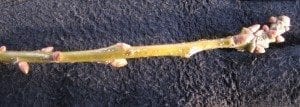
Oaks have clusters of buds at the end of each shoot.
The English Oak has buds that have fewer bud scales than those of the Sessile Oak.
These are the terminal buds of the English Oak. Each bud has a series of overlapping bud scales that protect the bud though the winter.
English Oak buds have fewer than 20 bud scales.
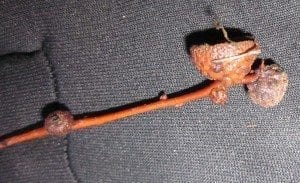
These are the buds of a Sessile Oak. These buds have more than 20 bud scales
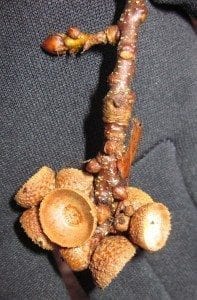
This is the old acorn cup of an English Oak. You will often find them under the tree in winter. The acorn of the English Oak is on a long stalk, as shown here.
These are the old acorn cups of the Sessile Oak. These cups are not on a long stalk. They sit on the shoot, hence the name sessile.
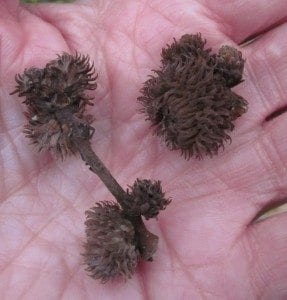
The buds of the Turkey Oak are hidden by whiskers.
The acorns of the Turkey Oak are also whiskered. So you should always be able to identify the Turkey Oak by it whiskers.
by Admin | Dec 20, 2013 | Uncategorized
In winter one of the easiest trees to identify is the Sweet Chestnut. You can’t id the tree from a distance by its shape but if you look closely at the bark, buds and shoots and then look for old leaves and old fruit underneath the tree, you can be sure that it is a Sweet Chestnut. All these photos are taken from the Tree Guide UK app.
Mature trees have very distinctive bark. The ridges swirl round the trunk like this.
The buds are very small and red/brown
Old leaves can often be often be found on the ground under the tree. They stay like this all winter.
Sweet Chestnut husks look like this. The nut will have been eaten, probably by squirrels but husks like this are found all winter under the tree. They are very spiky to the touch.
by Admin | Nov 25, 2013 | Uncategorized
In winter you may come across two thorn trees that look similar, the Common Hawthorn and the Blackthorn.
If you look carefully at the thorns, however, you should be able to tell one from the other. The photos shown below are all taken from the Tree Guide UK app.
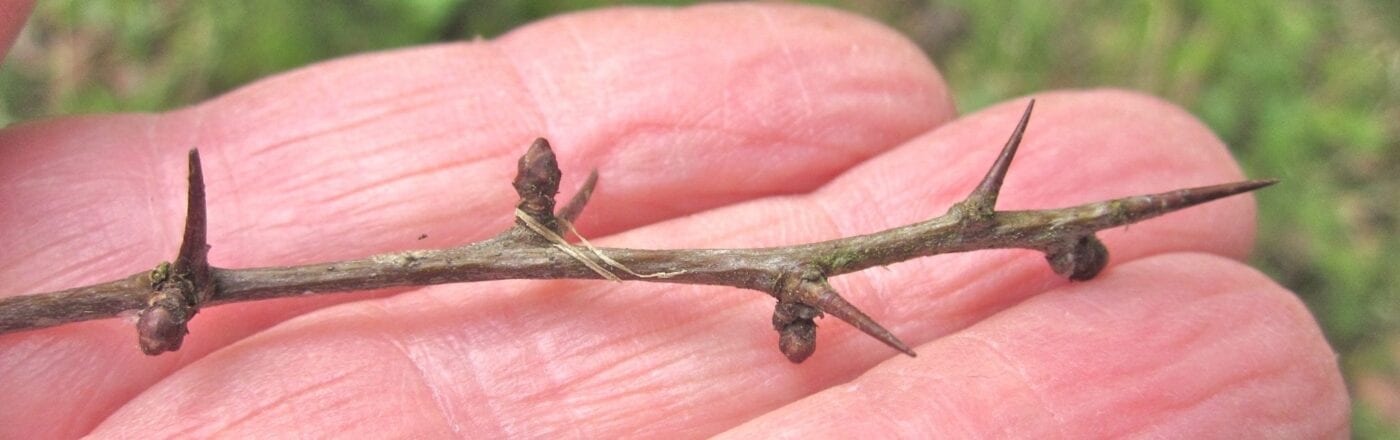
These are the thorns of the Common Hawthorn. These thorns are usually less than 2.5 cm long. There are no buds on the thorns.
These are the thorns of the Blackthorn. They are much longer than those of the Common Hawthorn. They may be 5cm or more long. There are buds on the thorns.
by Admin | Nov 11, 2013 | Uncategorized
The deciduous trees are now shedding their leaves and won’t grow a new set until spring. But you can still identify these trees using this guide by examining the buds, bark, old leaves, old fruit, thorns or catkins. The photos shown below are all taken from the Tree Guide UK app.
To identify a tree by its buds you need to look first at the bud at the end of the shoot. This is called the Terminal Bud.
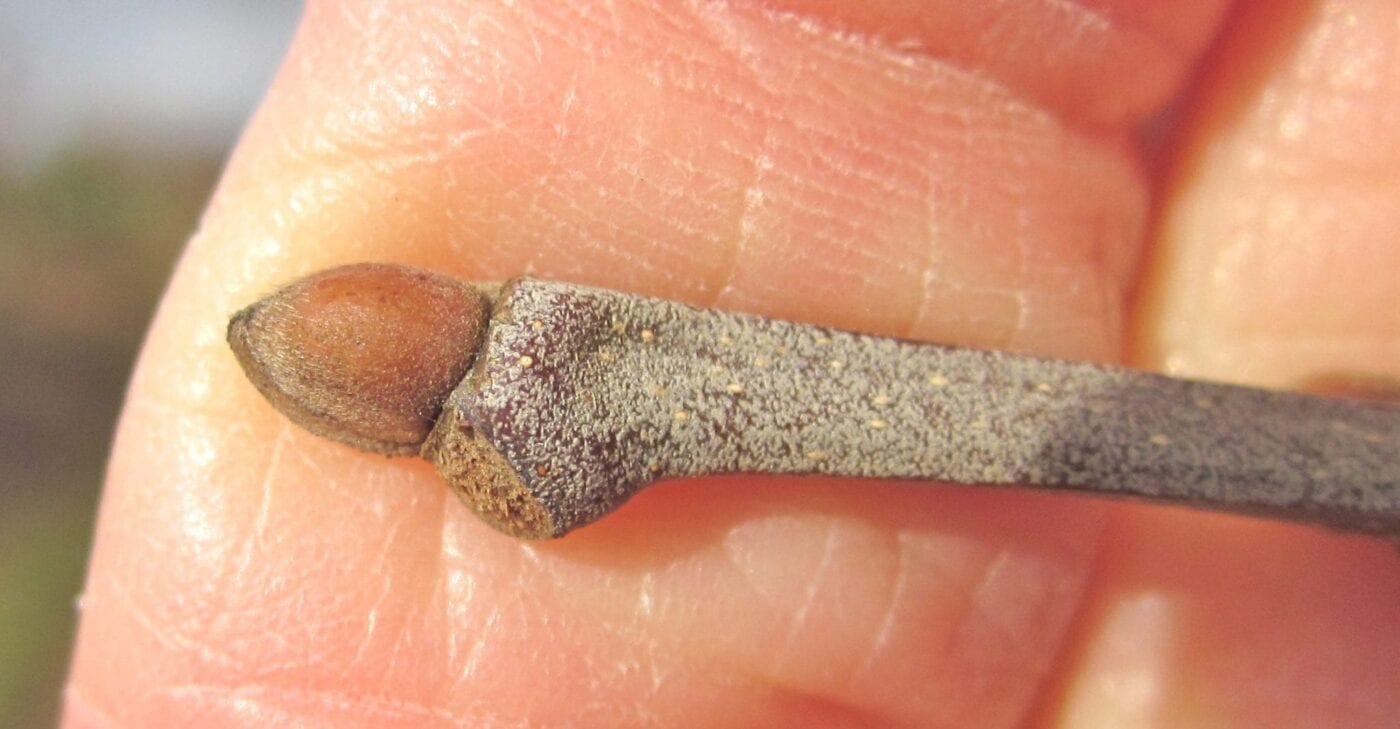
This is the terminal bud of a Horse Chestnut shoot. This photo was taken in November. The bud is large and often sticky with gum that helps to waterproof the bud through the winter.
Next you need to look at the Lateral Buds further back along the shoot.
These are the lateral buds of the Horse Chestnut and as you can see they are opposite one another, a diagnostic feature of the Horse Chestnut.
Finally you should look at other parts of the shoot.
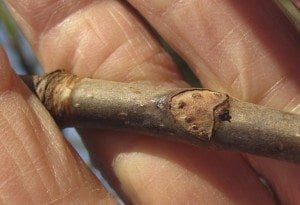
This is the leaf scar of a Horse Chestnut shoot. When the leaf falls, this scar is left on the shoot. The 6 marks that look like horse shoe nails are in fact the remains of the tubes that took water and nutrients to and from the leaf. This is a very clear diagnostic feature of the Horse Chestnut tree in winter.
by Admin | Oct 8, 2013 | Uncategorized
A new version (1.03) of the Tree Guide UK app is now online at the app store and can be downloaded.
This version has been updated for iOS7. It corrects an issue with Tree Information columns sometimes not displaying or displaying incorrectly.