Trees in Autumn

Trees in Autumn

Trees  in Autumn 

Some trees in Britain have spectacular coloured leaves in autumn. For more photos and a discussion of why some trees change colour in autumn click HERE 

Aspen
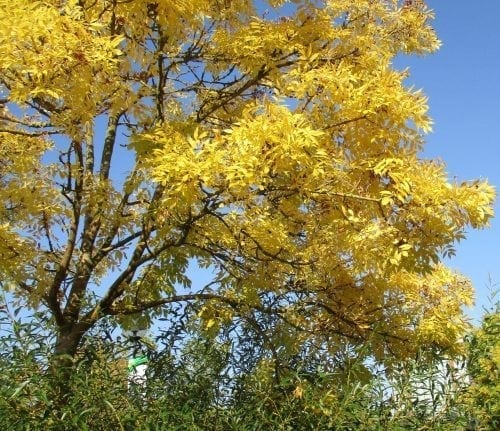
Golden Ash
The  first photo is of the Aspen Populus tremula. This is a Poplar that tolerates cold conditions. It is a smaller tree than most Poplars. It is a species that grows in cool regions across the whole of Europe and west Asia. (The American Aspen is a different species). It is more likely to be found in the north and west of Britain and is common in the Scottish Highlands. It is typically found in oak or birch woodland. It can spread by sending suckers up from its roots. Male and female flowers are on separate trees. Flowers are in the form of catkins. The second photo is of a Golden Ash Fraxinus excelsior ‘Jaspidea’. The Golden Ash is a medium sized deciduous tree with yellow shoots and golden foliage in autumn. It is a cultivar of the Common Ash and was introduced to Britain in the late 1870s. It was rare but is now found increasingly in parks and on streets where its spectacular autumn colour stands out. 
Common Beech
Persian Ironwood leaves
                                                                                       

The first photo is of the Common Beech Fagus sylvatica. The Common Beech is the dominant tree of woodlands in south and central England. It grows strongly on well-drained chalk soils found, for example, in The Chilterns. It does not like wet ground. It has been planted in woods, gardens and parks throughout Britain. Beech wood from The Chilterns was used as firewood for London, then when coal replaced it, for furniture. It is a large tree and can grow to 40m. In some years there is a huge crop of oil-rich beechnuts. These are known as ‘mast’ years where ‘mast’ is an old word for ‘fruit of the forest’. In former times pigs were fattened up on beechnuts and acorns prior to going to market.  The second photo is of leaves of the Persian Ironwood  Parrotia persica.  The Persian Ironwood is a small deciduous tree native to northern Iran. It was introduced to Britain in 1841. It is related to the Witch-Hazel. Its wood is extremely hard, hence the name ironwood. It has red flowers, which appear before the leaves in late winter. The leaves turn bright red in autumn. It is frequently found in parks and collections, often as a large shrub, selected for its superb autumn colours.                                            

Common Hornbeam
Maidenhair Tree leaves
The first photo is of the Common Hornbeam  Carpinus betulus. The tree is native to Southern England and is also found throughout Europe and Turkey. It is a medium-sized tree and can grow to 30m. It is common in hedgerows and woods and has been planted in many parks and gardens. Its wood is too hard to be used in general carpentry but has been used in hard-wearing tasks such as chopping blocks and cog-wheels. In Epping Forest Hornbeams were pollarded to provide firewood. The tree can be confused with the Common Beech but its oval leaves are toothed not smooth-edged. The bark of the tree is very unusual. It is smooth, like the Beech, but is patterned with distinctive silver-grey vertical lines. Male catkins appear in spring and the fruit hangs on the tree through winter. The cultivar ‘Fastigiata’ has an egg-like shape and is often planted on streets. The second photo is of leaves of the Maidenhair Tree Ginkgo biloba. The tree, also known as the Ginkgo, is the only surviving member of a family, which has existed since the Jurassic era 180 million years ago. The tree is native to a small area of China where it has been cultivated for centuries for its apricot-like “fruit”. It was introduced to Britain in 1758 and has been planted widely in southern England, in large gardens, parks and new towns. It is known as the Maidenhair Tree because its leaves resemble those of the Maidenhair fern. The tree can easily be recognised in summer by its unique leaves and in the winter by its large buds. The tree is deciduous – its leaves turn yellow and fall in autumn.                                                              


Flowering Cherry

Flowering Cherry

Flowering Cherry in spring with all images and text taken from the book Field Guide to the Trees of Britain and Europe published by Reed New Holland in 2017, author Alan Birkett and ISBN 9781921517839

Kanzan Cherry in April
Kanzan Cherry flower


The Kanzan Cherry shown here in April is one of the most popular of the Japanese Flowering Cherries, a large group of cultivars that were bred in Japan from the 15th Century and were known collectively as Sato Zakura (village cherries). Their taxonomic origin is unclear but one of their parents is believed to be the Japanese Cherry (Prunus serrulata), native to northern and central China, Korea and Japan. The flowering cherries were introduced to Britain as early as 1822. They bear white or pink flowers in spring. The cultivar ‘Kanzan’ was introduced to Britain in 1913 and is now widely planted in parks, in gardens and on streets. It has pink flowers in spring before the leaves. It is often just called Prunus ‘Kanzan’ in catalogues. 

‘Kanzan’ flowers emerge out of deep red buds, with bronze leaves in mid April. The cultivar ‘Pink Perfection’ is a hybrid of ‘Kanzan’ and flowers at the same time but has double-pink flowers emerging with green leaves. Each ‘Kanzan’ flower has 23 to 28 petals.

The following is a selection of Japanese Flowering Cherry Cultivars. ‘Amanogawa’ has a vertical shape and pale pink flowers. ‘Cheal’s Weeping’ is a small, weeping tree with deep pink, double flowers. ‘Hokusai’ has pale pink, semi-double flowers. ‘Ichiyo’ has white, pink tinged flowers with 16 to 22 petals. ‘Pink Perfection’ has double pink flowers emerging with green leaves. ‘Shirotae’, also known as Mt Fuji, has white, semi-double flowers. ‘Shirofugen’ has pink/white flowers and is one of the last to flower in spring. ‘Shogetsu’ has large white double flowers clustered along the branches. ‘Tai Haku’, also known as the Great White Cherry’, has very large, white, single flowers and big leaves. ‘Ukon’ has white, green/yellow-tinged flowers.


Four Urban Poplars

Four Urban Poplars

Four Urban Poplars with all images and text taken from the book Field Guide to the Trees of Britain and Europe published by Reed New Holland in 2017, author Alan Birkett and ISBN 9781921517839

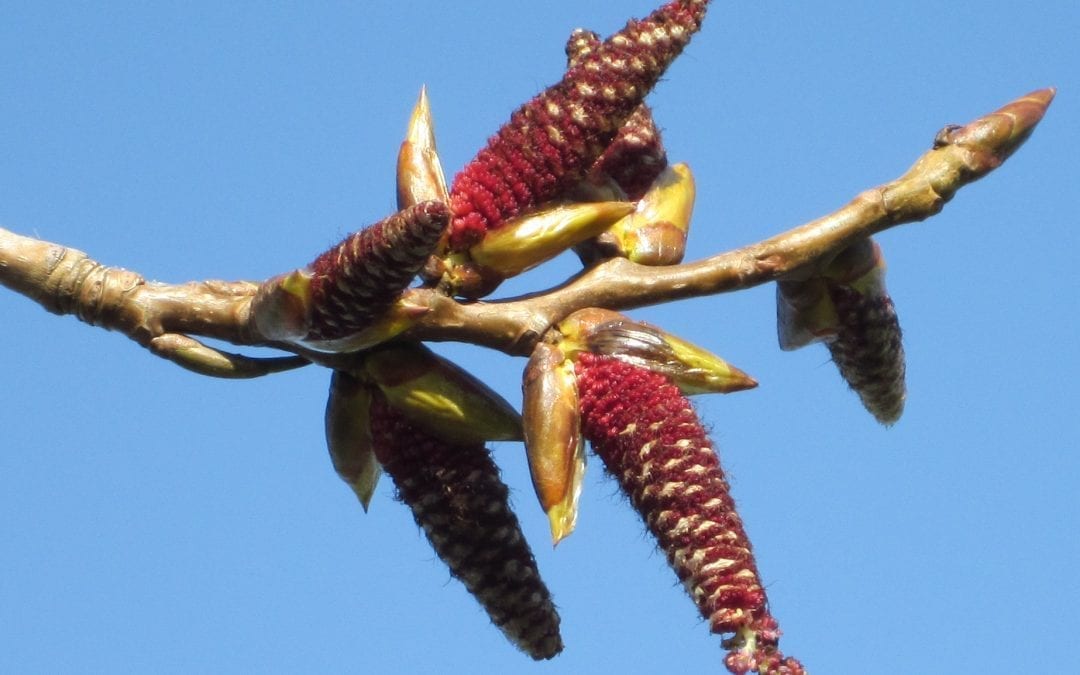
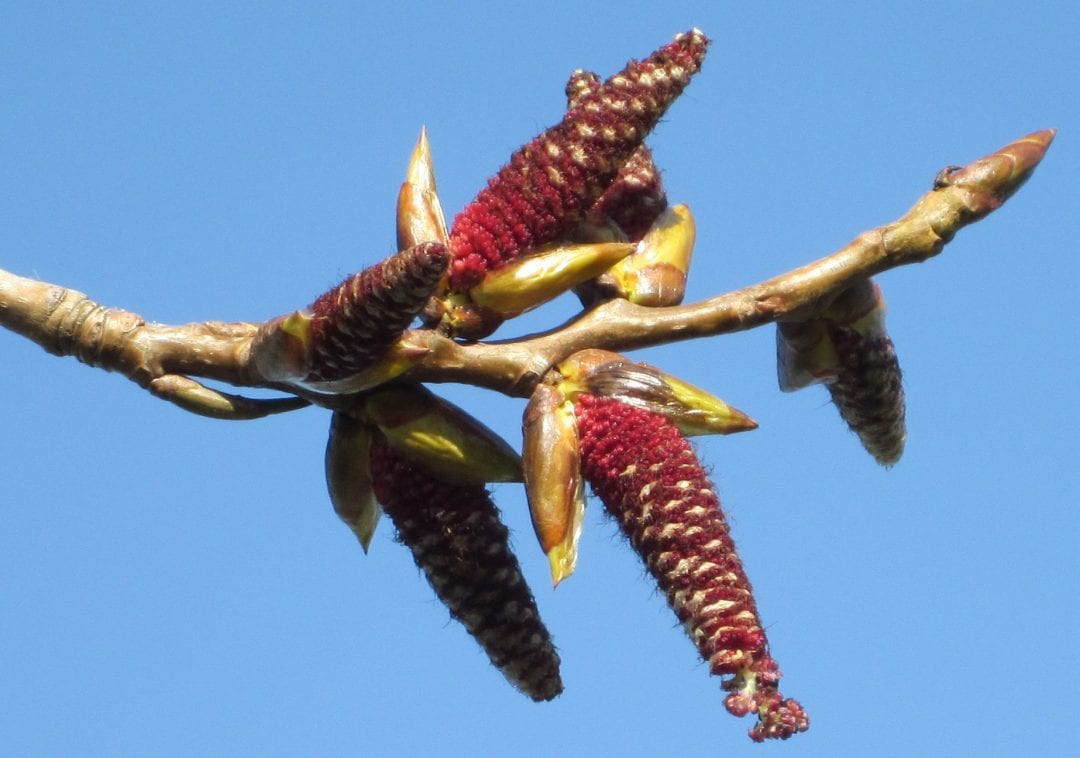
Male Aspen catkins
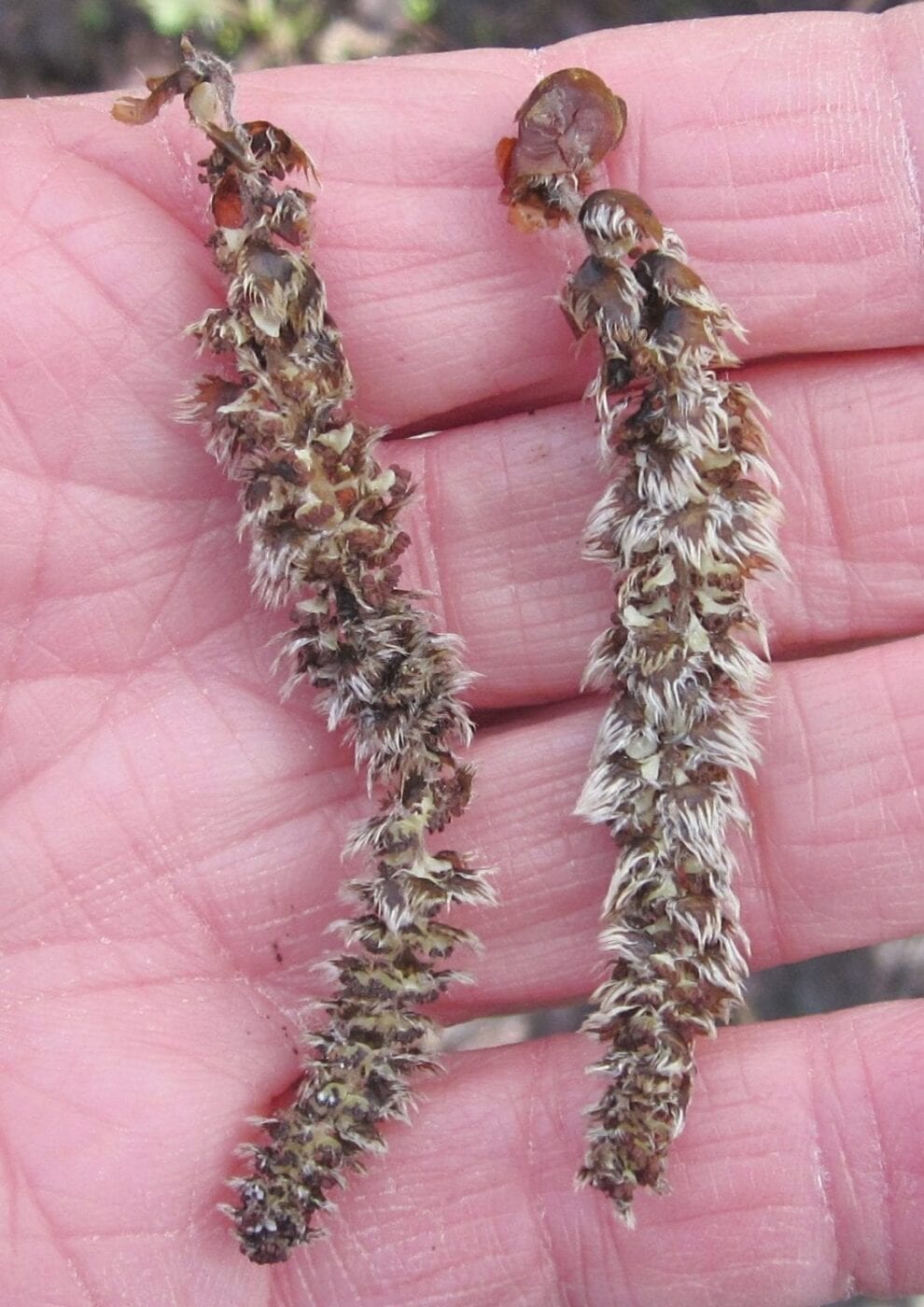
Grey Poplar male catkin


 Poplars have male catkins that release pollen in late March and early April. They open before the leaves so are easy to see. The first photo shows the male catkins of an Aspen. This is a Poplar that tolerates cold conditions. It is a smaller tree than most Poplars. It is a species that grows in cool regions across the whole of Europe and west Asia. (The American Aspen is a different species). It is more likely to be found in the north and west of Britain and is common in the Scottish Highlands. It is typically found in oak or birch woodland. It can spread by sending suckers up from its roots. Male and female flowers are on separate trees.  The second photo shows the male catkin of a Grey Poplar. This is a natural hybrid between the White Poplar and the Aspen. It may have been introduced. It has a wide distribution in Europe and Western Asia. It is common throughout Britain. It is easily confused with the White Poplar but it grows faster and becomes a larger tree. Because the tree is a hybrid it may show aspects of both parents.

Balck Poplar male catkins
Hybrid Black Poplar male catkins

The first photo shows the male catkins of a Black Poplar. This is a large tree, native to Northwest Europe, including England and Wales where it is usually found as the variety ‘betulifolia’. It is endangered. It is common in the Vale of Aylesbury and in Manchester but rare elsewhere. This odd distribution is probably the result of local planting for timber. The tree is generally found growing close to water and nearly always leans. The bark is distinctive. Old trees have deep cracks that swirl round the trunk. Most of the trees are male and bear colourful catkins in spring. In 2002 there were estimated to be 7000 trees in the whole of the UK with only 600 females. This was probably an underestimate so there may be as many as 15,000 trees left in the UK but a disease known as “Scab” is attacking the ones growing near Manchester.

The second photo shows the catkins of a Hybrid Black Poplar. These hybrids arise when the European Black Poplar is crossed with the American Eastern Cottonwood. Some hybrids are natural but many are artificial. Hybrid Black Poplars are common. Some have been planted for timber production but others have been planted in large numbers in new towns and developments because they grow rapidly. They are generally known by their ‘cultivated variety’ name such as ‘Robusta’, ‘Regenerata’, ‘Serotina’, ‘Eugenei’ etc.

Early Flowering Tree

Early Flowering Tree

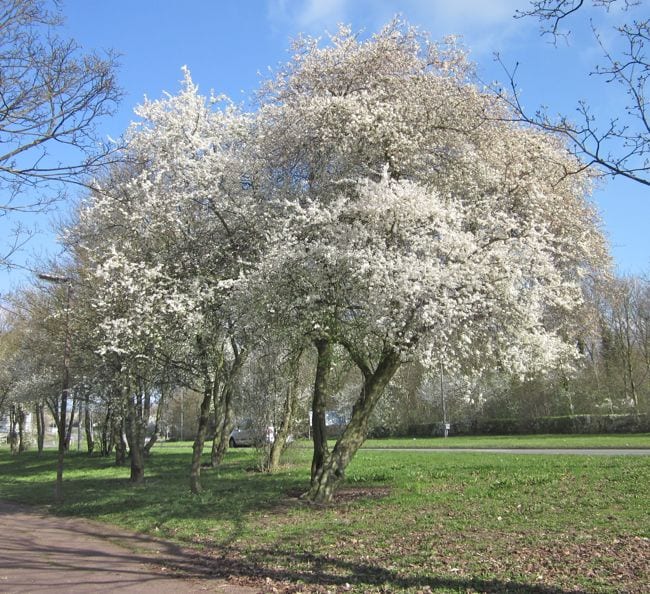
The Cherry Plum is a thorny shrub or small tree and is frequently planted in urban areas because it is one of the first trees to come into flower in the spring. It is also known as the Myrobalan Plum. It is native to a region from the Balkans to central Asia and has been cultivated in Britain from the 16th century. The word “Myrobalan” was originally used for the sharp-tasting fruit of an Asian tree before it was applied to this plum. 

Its white flowers come out before the leaves in early March. It is often confused with the Blackthorn, which has almost identical flowers. The flower of the Cherry Plum is bigger than that of the Blackthorn but apart from that they are very similar. However, the Plum is the earliest to flower (usually in March) and the blackthorn flowers four  weeks later in April. To learn more about a comparison between Cherry Plum, Blackthorn and Wild Cherry flowers click HERE


Tree in August

The fruit in July. The plum is yellow or red and can be eaten raw or used in cooking.

There is a cultivar of the Cherry Plum called Prunus cerasifera ‘Nigra’ which looks similar and flowers at the same time but has  pink flowers and purple leaves.

Ash flowers in March

Ash flowers in March

Ash flowers in March

The Common Ash Fraxinus excelsior produces flowers in March before the leaves. Ash trees have a complex reproductive system. The flowers have no petals and may be male, female or bisexual. In any population some trees have only male flowers and produce pollen, some only female flowers and produce seeds and some have  bisexual flowers  and produce pollen and seeds.

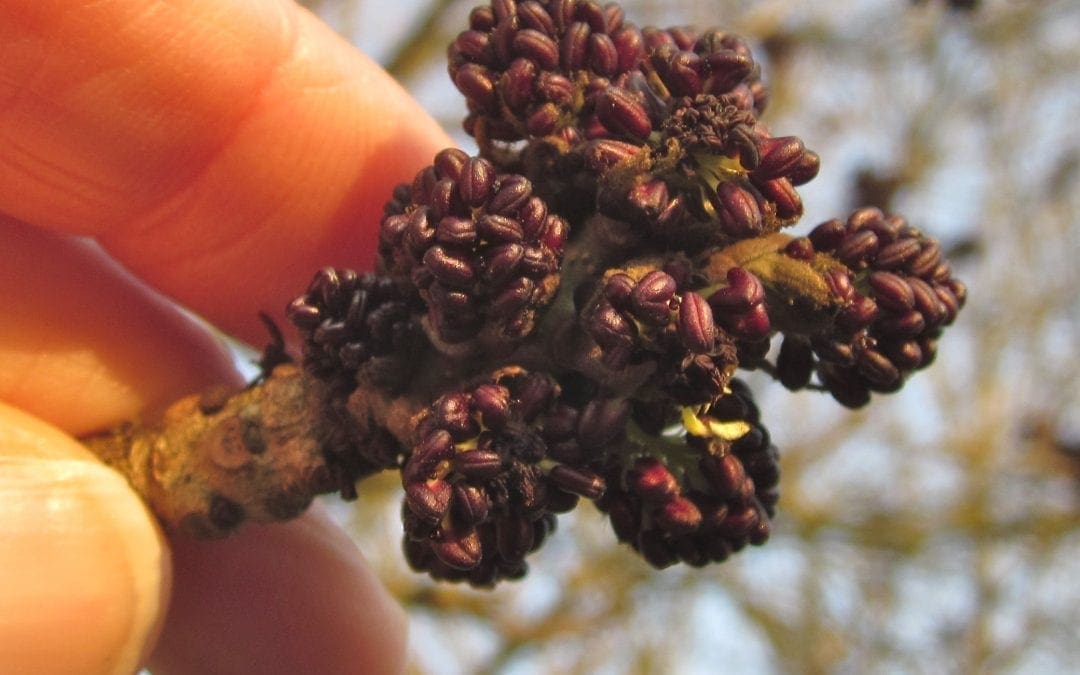
Common Ash tree male flowers

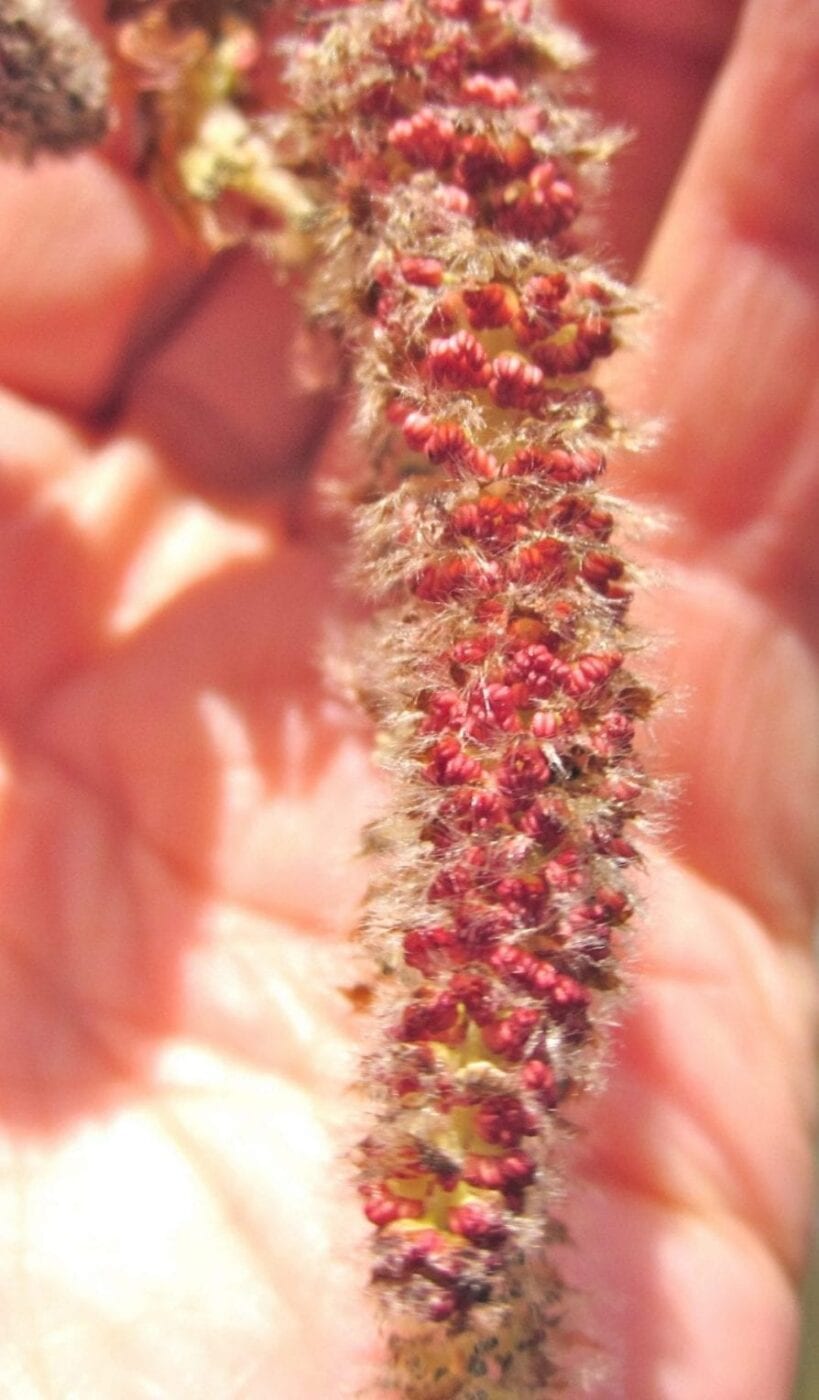
The  photo shows male flowers in March, before the leaves. Ash flowers have no petals. This photo of a male flower cluster shows the purple anthers that split open to release pollen onto the wind.

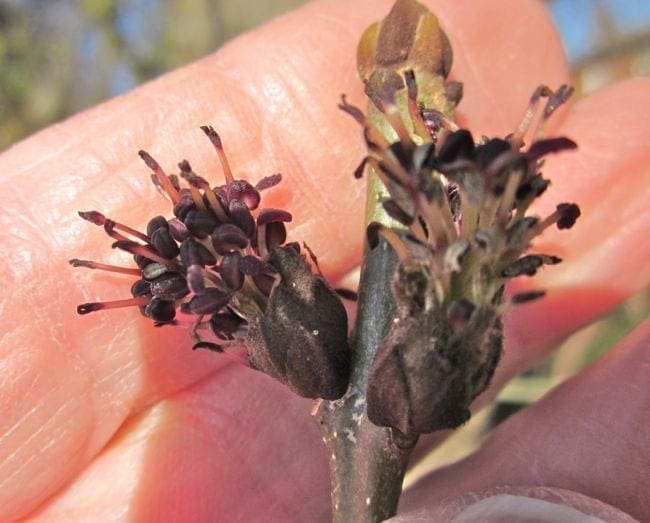
Common Ash tree male/female flowers

The  photo shows flowers that have male and female parts. It shows the female styles and stigmas sticking up above the male anthers. When (male) pollen falls on the (female) stigmas, fertilisation takes place and fruit formation begins. Stigmas on the flower are not receptive to pollen when it is being released by the same flower. This avoids self-fertilisation.

Comon Ash tree female flowers

The photo shows fertilised female flowers in April. The purple fruits are just starting to form and the leaves are just coming out.

Common Ash tree fruit

The  photo shows how the Ash fruits, known as keys, hang down in bunches in July. Each fruit is technically called a samara. The word refers to any dry fruit which has flattened wings attached to it to help in its wind dispersion.

Last Alder in Leaf

Last Alder in Leaf

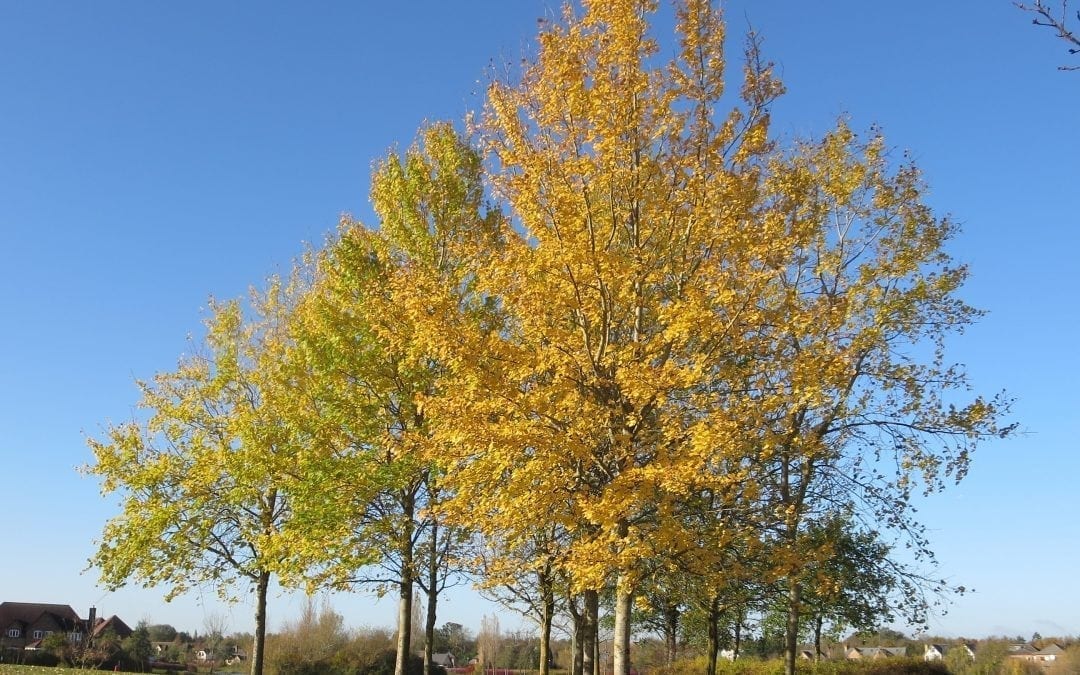
Italian Alders are the last Alders to shed their leaves and may still be in leaf in December. All images and text are taken from the book Field Guide to the Trees of Britain and Europe published by Reed New Holland in 2017, author Alan Birkett and ISBN 9781921517839.

Italian Alder
Italian Alder leaf
                                                                                                                     

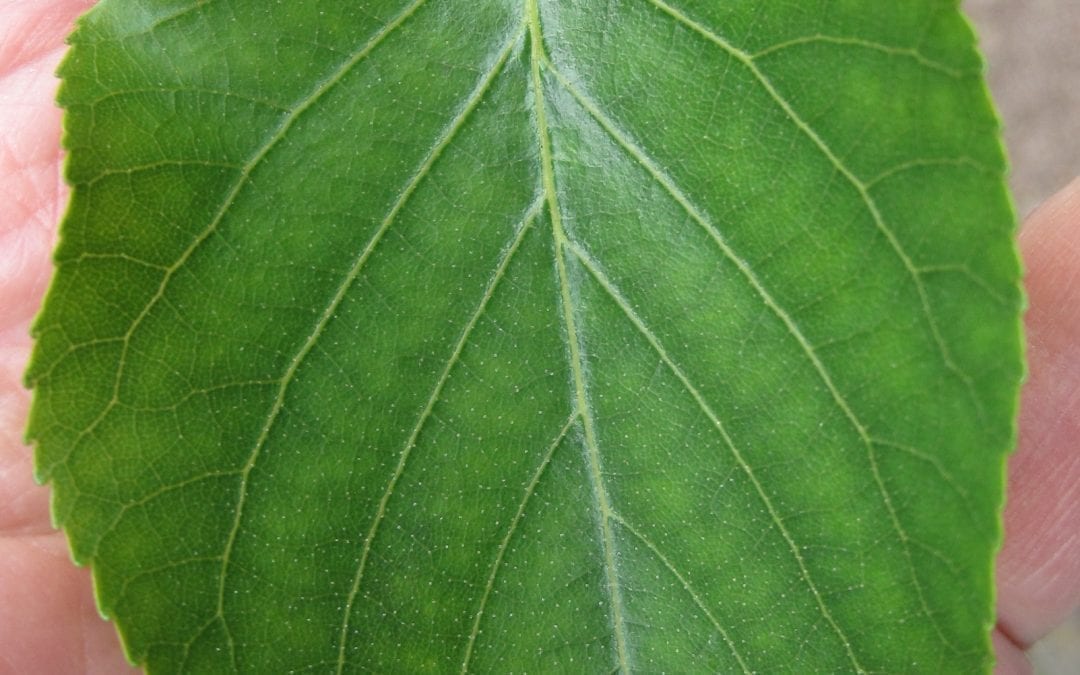
The Italian Alder, native to Italy and Corsica, was introduced in 1820 and is now common in parks, gardens and urban areas. It grows rapidly and is highly tolerant of urban pollution. It has catkins like the other Alders but the female cone-like catkins are bigger than those on the Common and Grey Alder. It has glossy heart-shaped leaves that stay on the tree until November or December. The first photo shows a tree in August, the second shows the glossy leaf. 

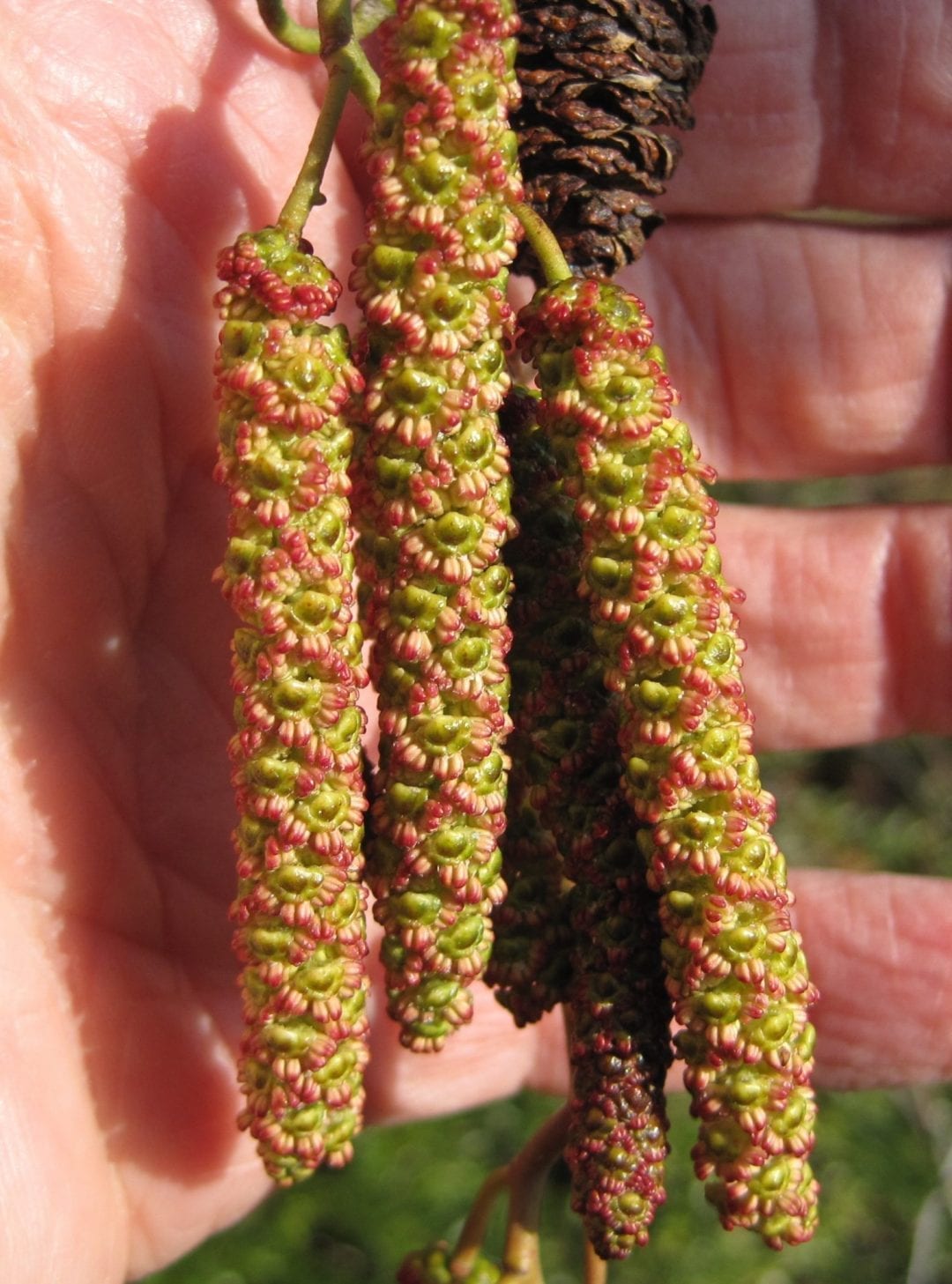
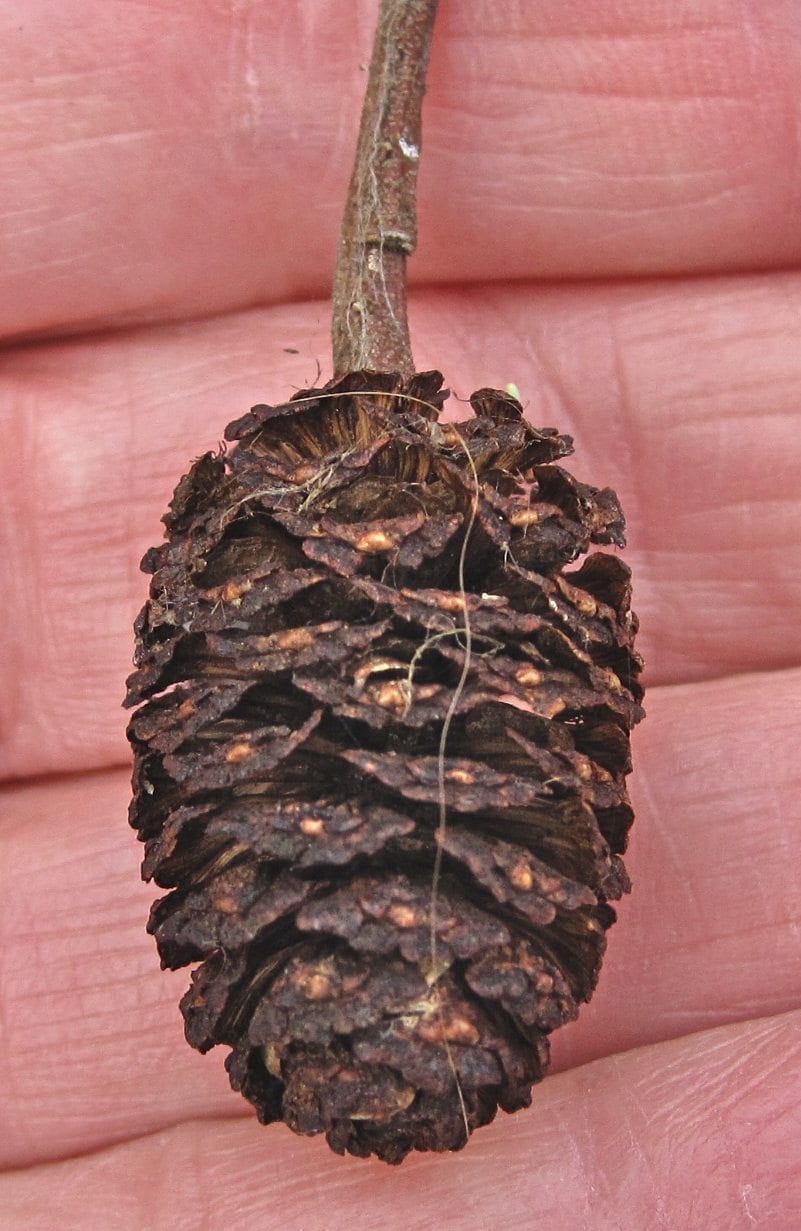
Alders have male and female flowers on the same tree. The flowers have no petals – they take the form of catkins. Male catkins are formed in spring, grow upright through the summer and then hang down through the winter until they shed pollen in February/March. Female flowers are pollinated in February/March, grow into round green cone-like catkins in the summer and turn brown and shed seeds in autumn and winter. Female catkins stay on the tree through the winter and the following summer.

Italain Alder male catkin
Italian Alder female catkin
The first photo is a close-up of male catkins in March before shedding pollen. The red anthers are not yet open to release pollen. The second photo shows a woody, cone-like, female catkin, which on the Italian Alder are bigger than on any other Alder. This is a female catkin that has released its seeds in autumn, photographed in the following July.