Spruce or Fir

Spruce or Fir

Spruce or Firs 

There are about 35 species of Spruce worldwide. They are evergreen conifers found right across North America and Eurasia. They form vast forests in northern regions and some, such as the Sitka Spruce, have been widely planted for timber production in Britain. They can easily be confused with Firs but differ in the way the needles are attached to their shoots. They have cones that hang down whereas Firs have cones that stand upThere are about 50 species of Fir worldwide. They are often called Silver Firs. They are evergreen conifers found in upland areas of North America, Eurasia, Central America and North Africa. 

European Silver Fir

The Norway Spruce is a conifer native to Southern Scandinavia, the Alps, the Balkans and Russia and was introduced to Britain around 1500. It is now very common in forests, shelterbelts, parks and gardens. It was the traditional Christmas tree and is probably now the commonest ornamental spruce. It has masses of large cones near the top of the tree. The needles are not spiky.

The European Silver Fir is a conifer native to the Mountains of Europe, from the Pyrenees to the Balkans, was introduced in 1603 and is now common in upland woodlands in the west and north of Britain. It has been planted in large gardens elsewhere. Like all silver firs the leaves tend to look silver when viewed from below because the needles have 2 broad white bands underneath.
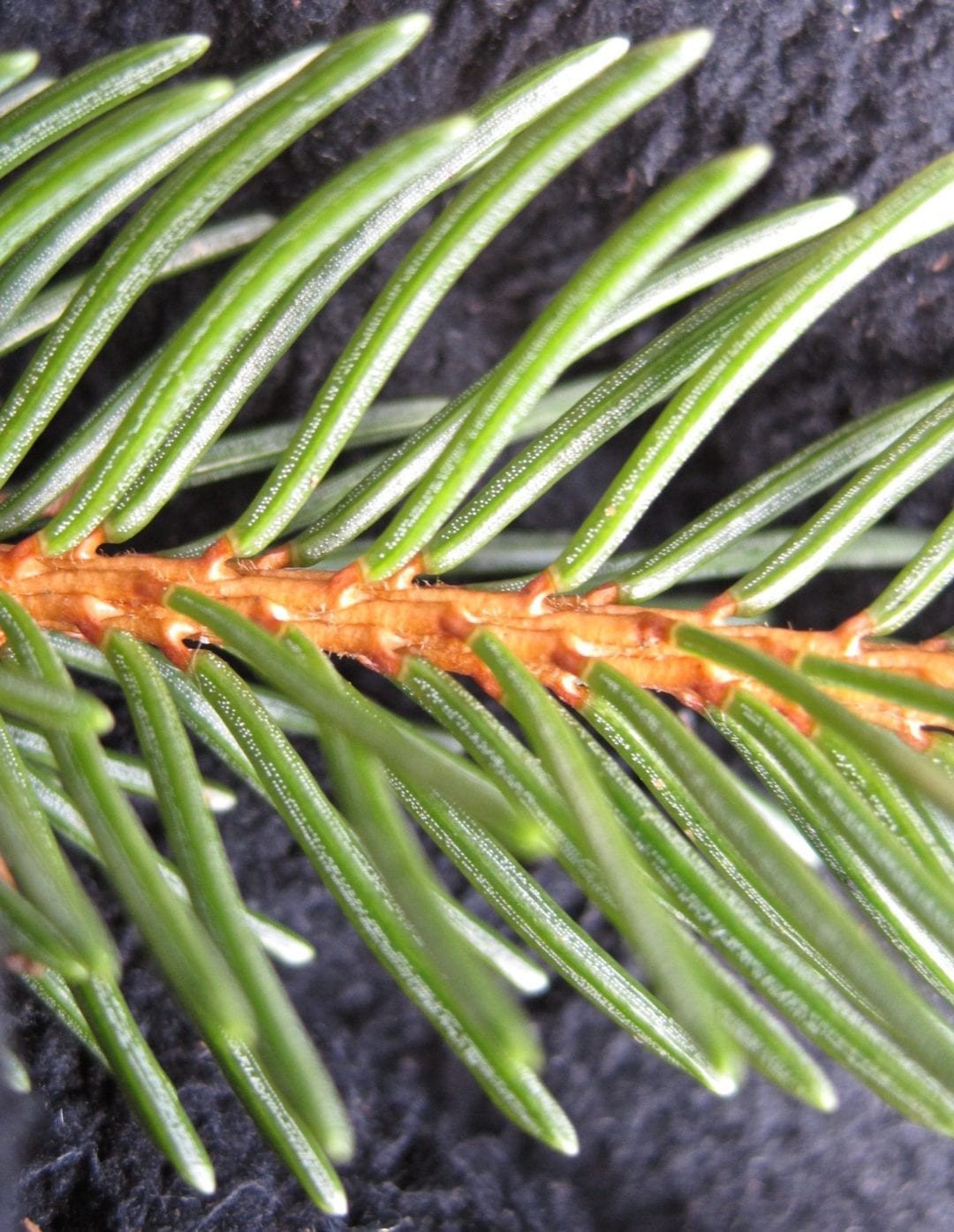
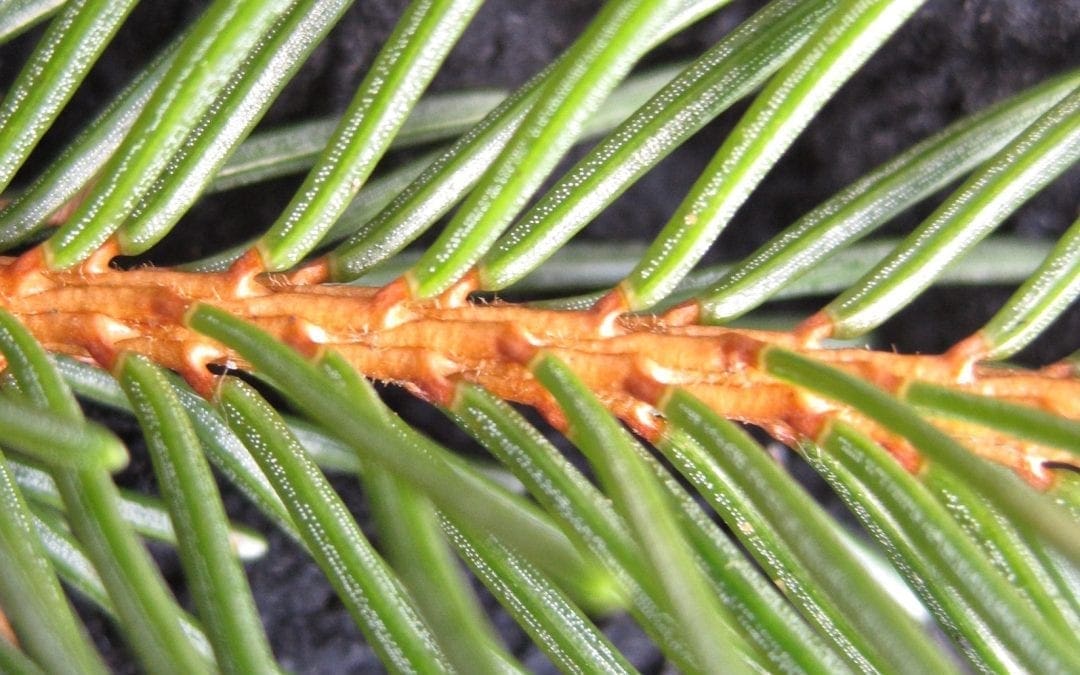
Norway Spruce needles

The Norway Spruce has an orange shoot and white lines on the needles. Where the needle joins the shoot is a wooden peg characteristic of all Spruces.

European Silver Fir needles

The European Silver Fir has two white bands underneath and there is a green pad where the needle joins the shoot. This is typical of all Silver Firs and differs from all Spruces, which have a woody peg.

Two False Cedars

Two False Cedars

Two False Cedars – Incense Cedar and the Western Red Cedar

Two  trees – the Incense Cedar and the Western Red Cedar –  are called cedars but are  not  ‘true’ cedars; they get their name from having wood that smells similar to the ‘true’ cedars – Cedar of Lebanon, Deodar and Atlas Cedar. They are commonly called ‘false cedars’. They can be identified by differences in their leaves and cones.

Incense Cedar

The Incense Cedar, a conifer native to California, was introduced to Britain in 1853.  It is in fact a member of the Cypress Family. The scale-like leaves can be confused with the Lawson Cypress or Western Red Cedar but the cones are quite different. The leaves generate an aromatic scent when crushed. The tree is grown in large parks, gardens and by roads.

Western Red Cedars

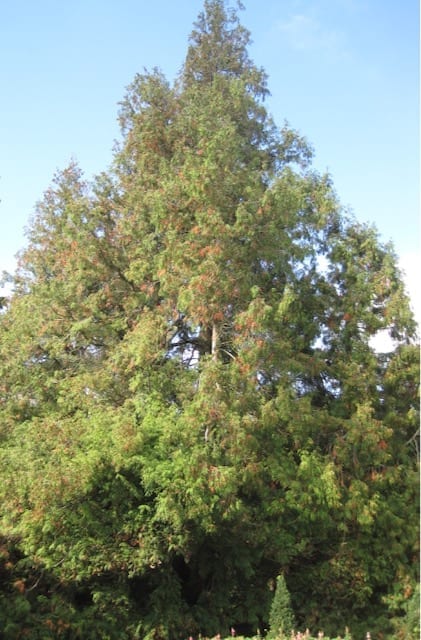
The Western Red Cedar, a conifer native to Western Canada and USA was introduced to Britain in 1853.  It can grow very rapidly and is widely planted in gardens, parks and forestry plantations. Its scale-like leaves are similar to the Lawson Cypress but its flask-shaped cones are different and can be confused only with the Incense Cedar. Its leaves emit a fruity smell when touched.

Incense Cedar scale leaves

The leaves of the Incense Cedar are in the form of over-lapping scales that are close to the shoot until they reach the pointed tips. The scale-like leaves are longer and cling closer to the shoot than those of the Lawson Cypress or the Western Red Cedar. 

Western Red Cedar scale leaves

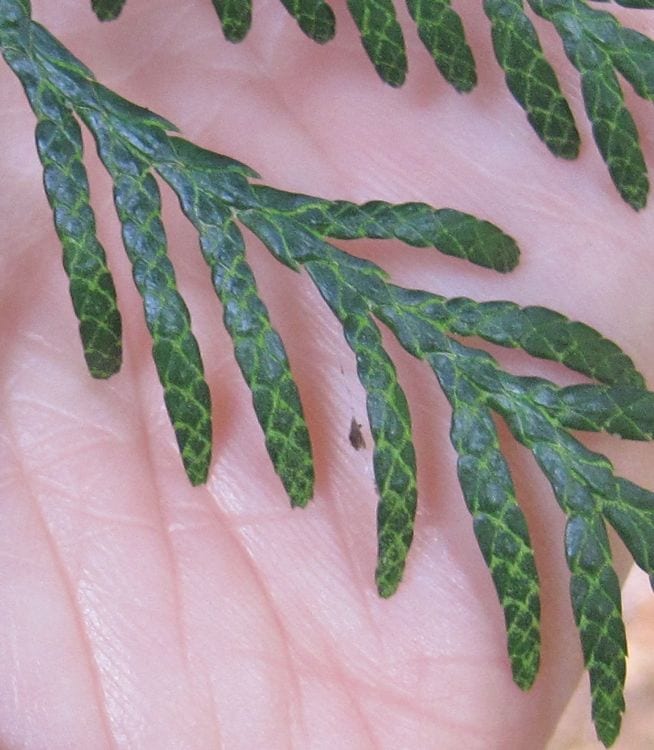
The scale-covered shoots of the Western Red Cedaer  hang down in flat sprays. The leaves emit a strong smell of pineapple if they are crushed between the fingers. This is a very good way of identifying a Western Red Cedar if you can’t see any cones.

Incense Cedar cones

The cones of the Incense Cedar  hang down like small ornamental flasks.

Western Red Cedar cones

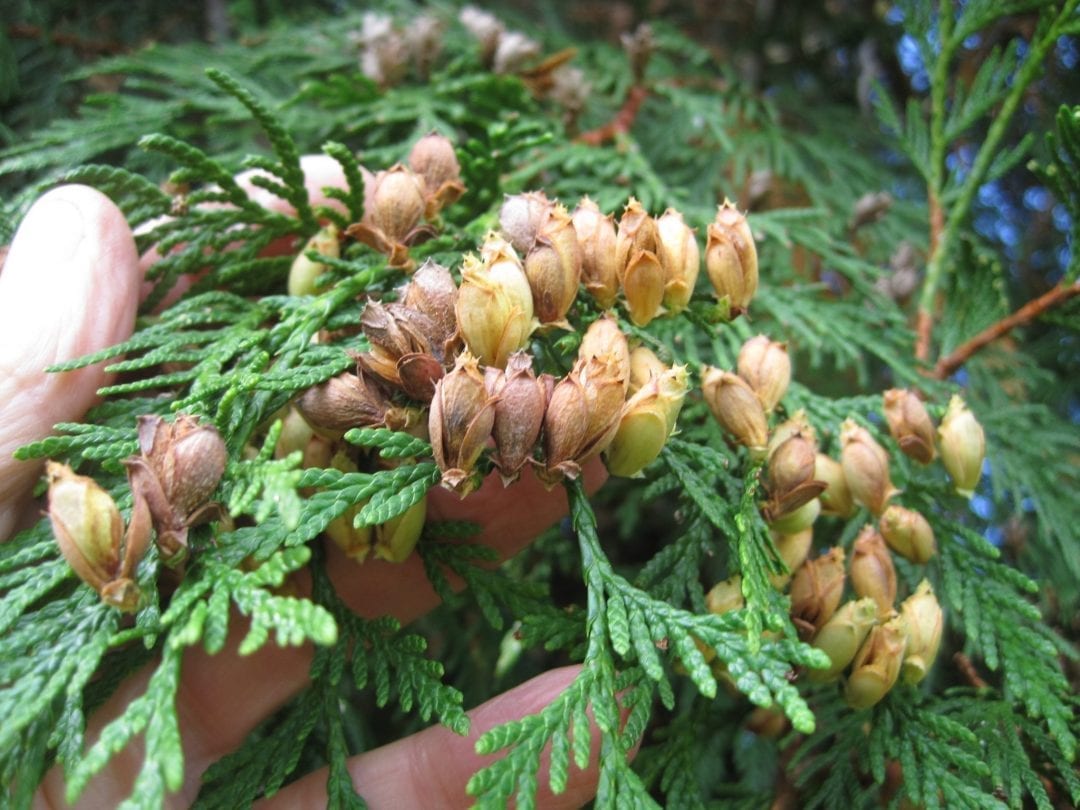
The Western Red Cedar has flask-like cones but they are about half the size of the Incense Cedar cones and stand upright. Photo taken in August.

Medlar

Medlar

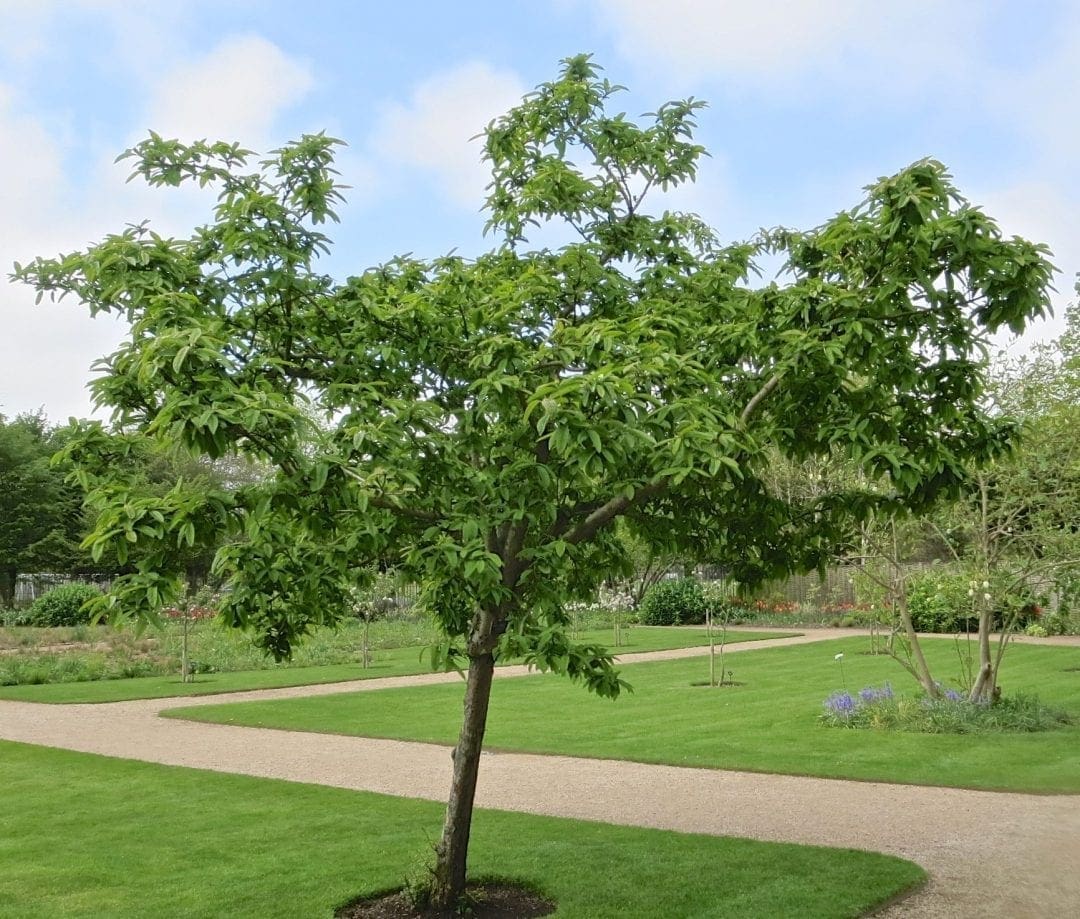
The Medlar tree Mespilus germanica

The Medlar Tree can be identified by its leaves, flower and unusual fruit. It has been cultivated in England since Medieval times. The Medlar tree is the only species in the Mespilus genus which is a member of the Rose family. It is most closely related to the Crataegus genus (Hawthorn) which is also a member of the Rose family.

Medlar Tree in April
Medlar tree leaf


The Medlar Mespilus germanica is a small tree native to the Black Sea coast of Turkey, through the Caucasus, to northern Iran. It has been cultivated in those regions for thousands of years. It was cultivated in England in Medieval times and was a commonly eaten fruit even in Victorian times but is now rarely eaten. It is not common but is found in old gardens and may have spread into woods in warmer areas. The tree is often grafted onto a hawthorn rootstock. The first photo shows a Medlar tree in late April. The second photo shows that the leaves are long, narrow and wrinkly. 

Medlar tree flower
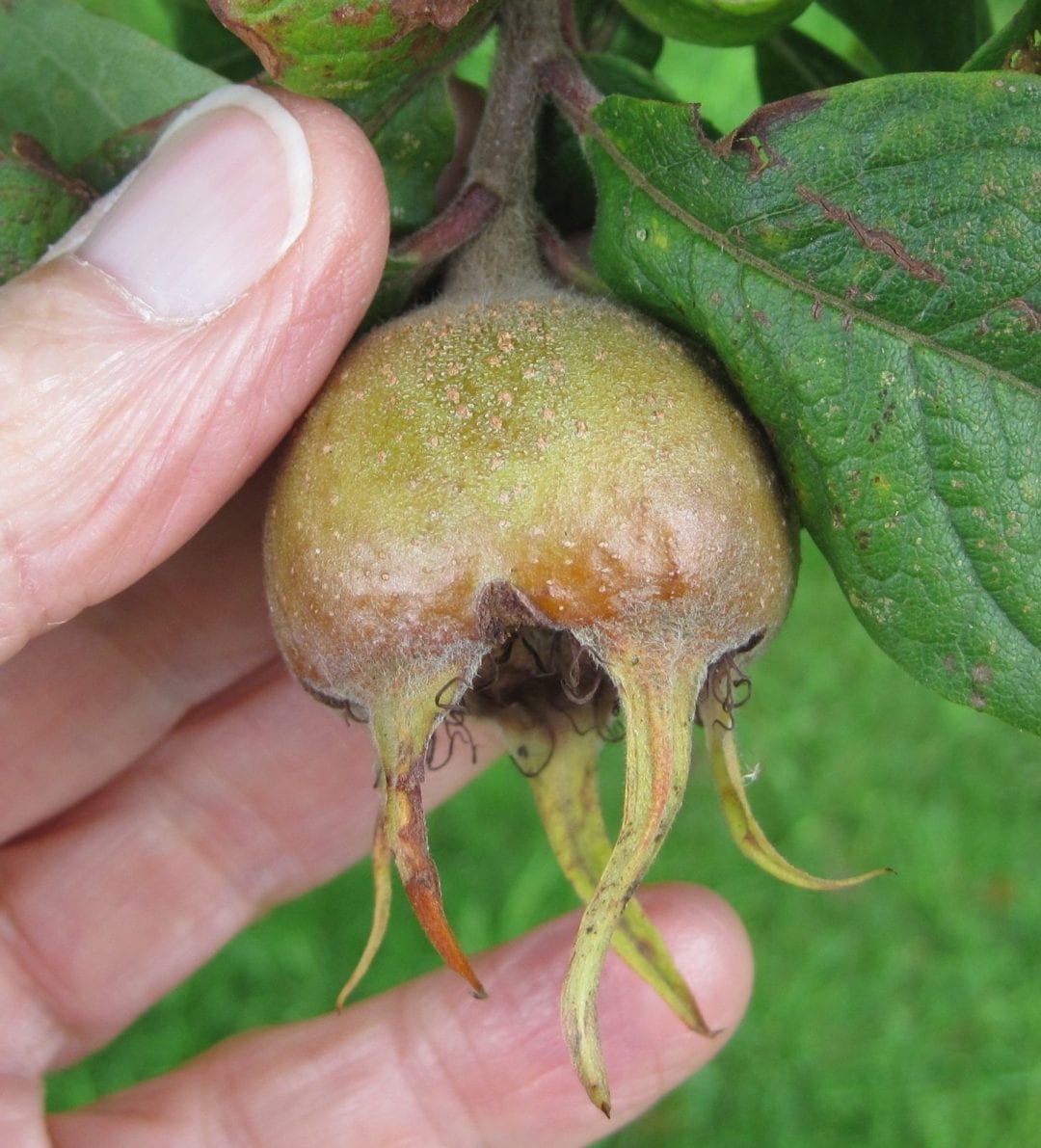
Medlar tree fruit
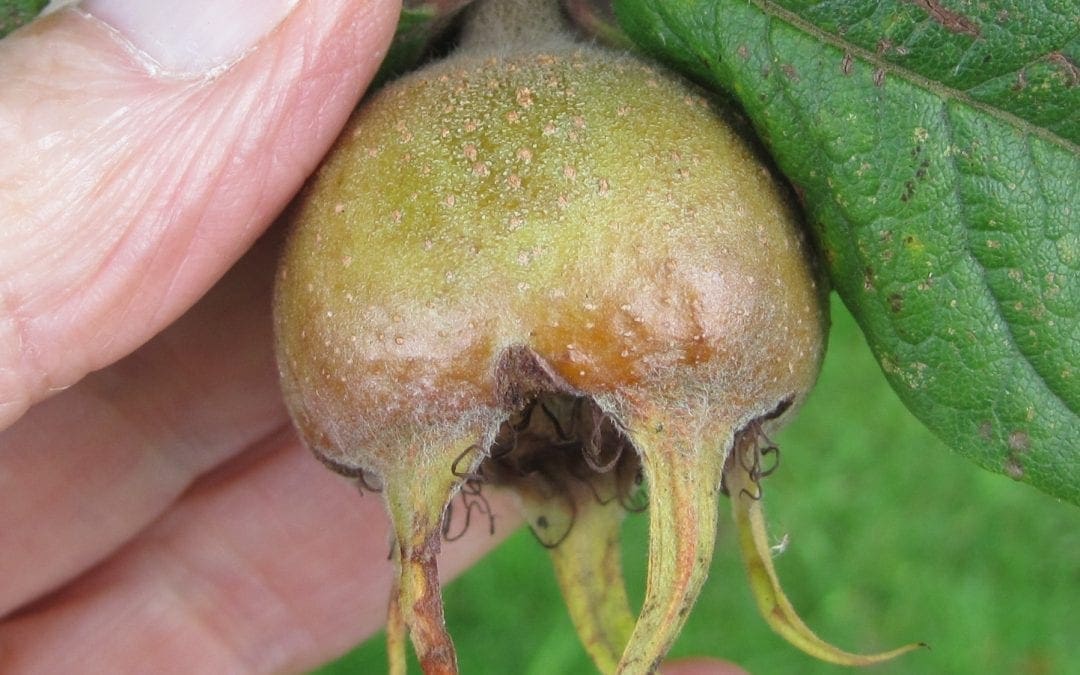
The first photo shows a Medlar flower. They emerge after the leaves in May. Flowers have 5 white petals, white stamens and yellow/brown anthers. Behind the flower are 5 green sepals, which become prominent when the fruit is formed. The second photo, taken in September, shows a Medlar fruit. It looks like a brown apple and is technically a pome, like the apple, but it has long sepals that surround an open pit.  The fruit is hard and bitter until it ripens as a result of exposure to frost or having been kept for a long time. This process is known as bletting. The interior then looks rotten, like a pulp, but is perfectly edible. It can be eaten raw or used to make jelly or curds. In Shakepeare’s time the term medlar was used to refer to something that was rotten inside.
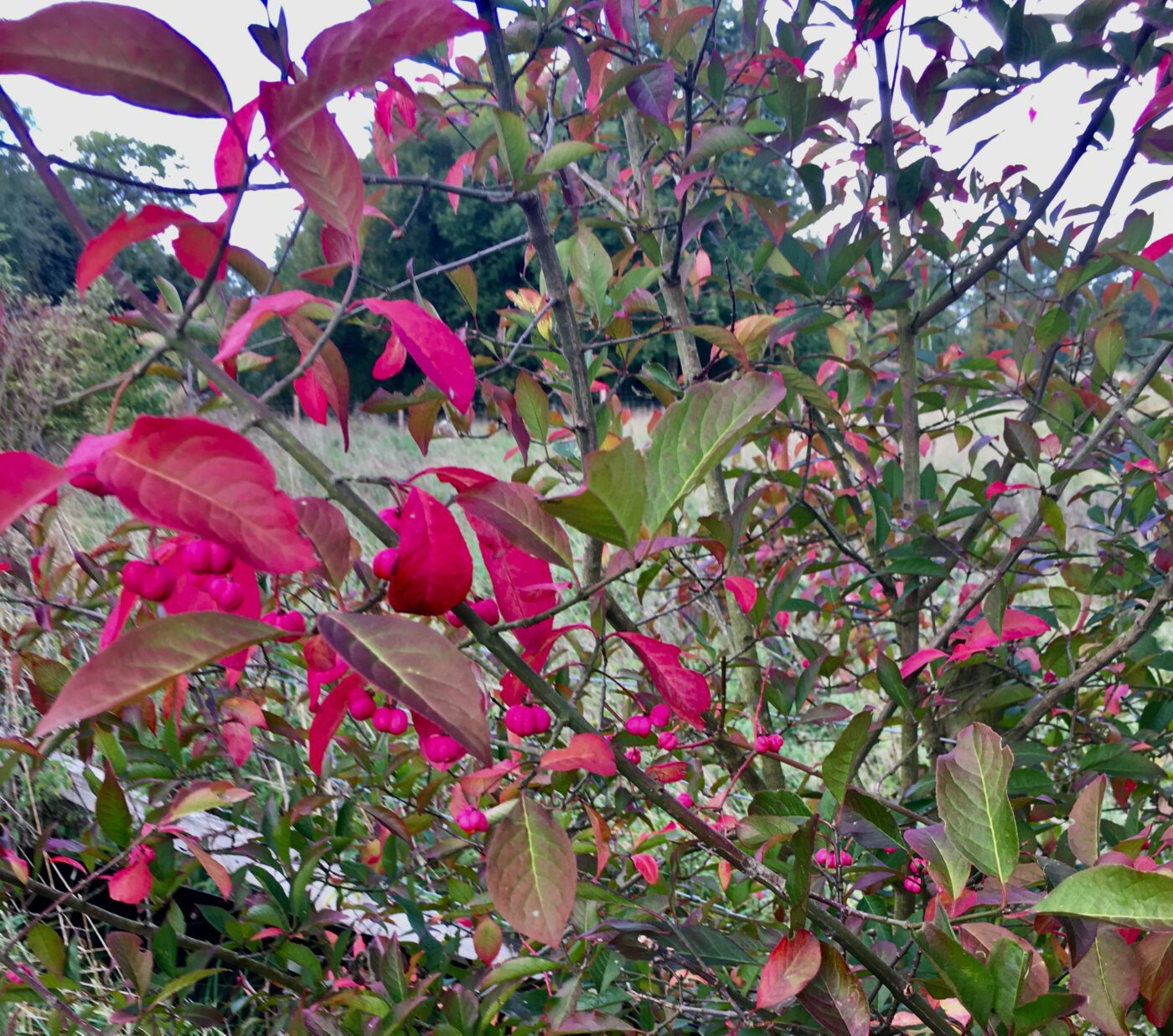
Spindle Tree in Autumn

Spindle Tree in Autumn

 Spindle Tree in Autumn

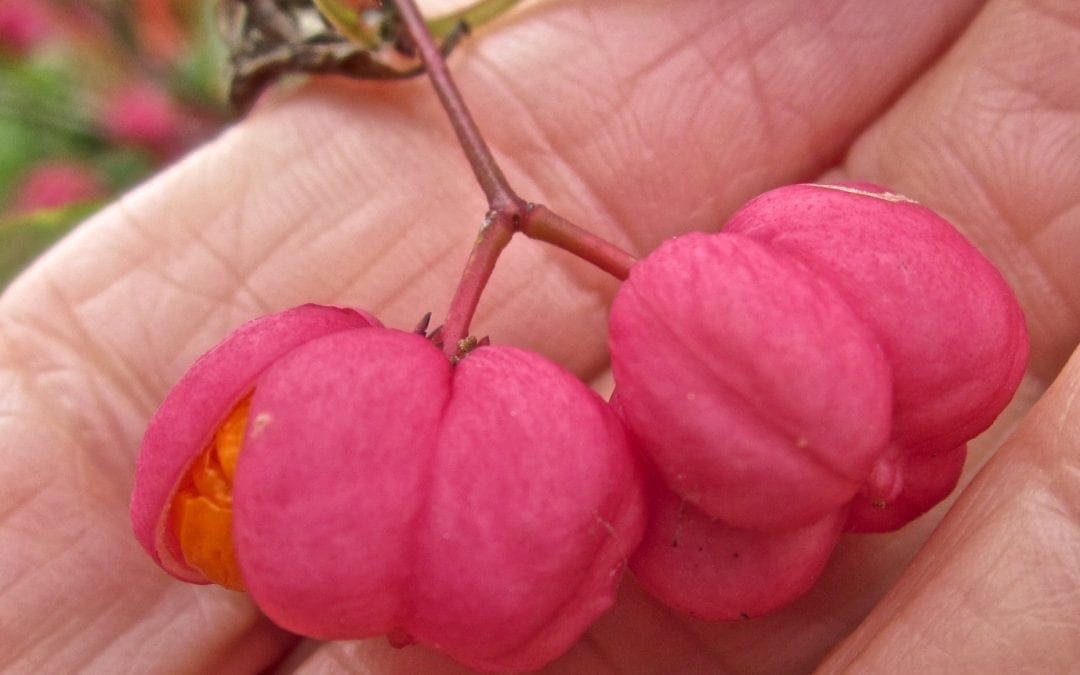
The Spindle Euonymous europaeus is a bushy tree native to Europe, including Britain, Turkey and the Caucasus.  The Spindle is common in hedges and woods on lime-rich soils and has been planted in many gardens. Its wood is hard and fine-grained and was used to make spindles for wool spinning. The small white flowers appear in May. It has a very unusual looking fruit, which is in the form of orange berries in a 4-lobed pink capsule. Technically the orange ‘berries’ are arils, like yew ‘berries’ with an orange outgrowth from the seed which encloses the seed. The leaves are similar to Blackthorn but paired and opposite. It is a member of the Euonymus genus, from which a huge number of ornamental garden plants have been developed.  The genus of 175 species includes evergreen and deciduous dwarf shrubs, vines and trees. The deciduous shrubs are gown for their autumn colour. 

Spindle Tree in Autumn – tree, leaves and pink fruit capsules in autumn. For more photos click HERE.


Spindle Tree in autumn

A Spindle tree in a churchyard in September

Spindle Tree fruit in autumn

Trees are often heavily laden with these unusual fruits in autumn. 

Spindle Tree fruit

Fruit in September

Spindle Tree leaves

The leaves are Blackthorn-shaped but arranged opposite one another on the shoot. Blackthorn leaves are alternate.

Two Deciduous Conifers

Two Deciduous Conifers

Identification of two Deciduous Conifers with all images and text taken from the book Field Guide to the Trees of Britain and Europe published by Reed New Holland in 2017, author Alan Birkett and ISBN 9781921517839

Swamp Cypress in November
Dawn Redwood in November
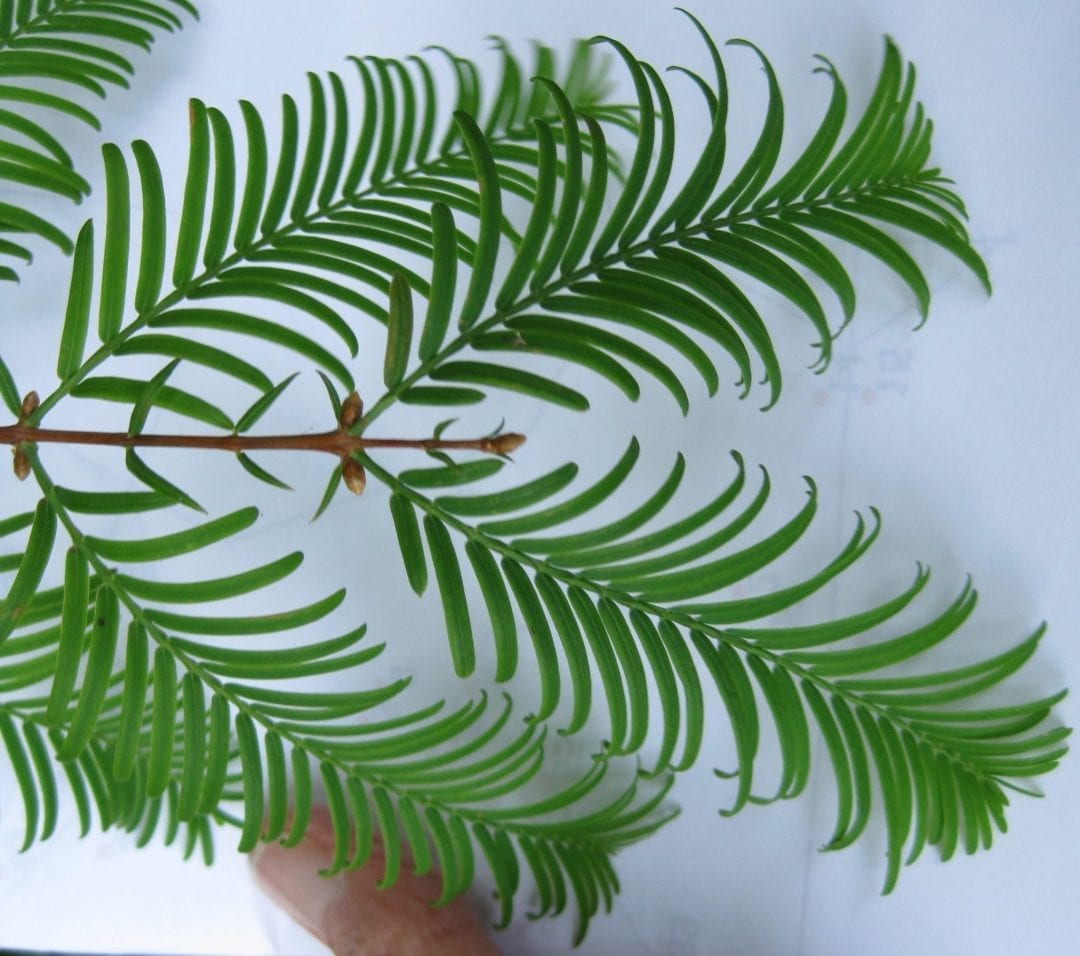
Not all conifers are evergreen. Here are two conifers that shed their leaves in autumn. The first image is of the Swamp Cypress and the second that of the Dawn Redwood. Both photographs were taken in November. The Swamp Cypress, also known as the Bald Cypress, is a conifer native to the coastal areas of southeastern USA from Delaware to Texas and the Mississippi River valley. It was introduced to Britain in1640. In the USA it is usually found in low lying, waterlogged areas but it can grow well in dry conditions. In Britain it has been planted in formal gardens and parks. The Dawn Redwood is a conifer that was only re-discovered in central China in 1941. It was known from the fossil record but was thought to be extinct. It is one of the World’s most endangered trees. It was introduced to Britain in 1948 and has since been planted in many parks and gardens in warmer regions. It grows best next to water. The Dawn Redwood, the Coast Redwood and the Giant Sequoia (sometimes called the Sierra Redwood) are all related. They are relics from a period 100 million years ago when they were widespread. They now have very restricted natural distributions – the Dawn Redwood to central China and the other two to California.
Swamp Cypress leaves
Dawn Redwood leaves
The leaves of the Swamp Cypress can be confused with those of the Dawn Redwood but the shoots and leaves, if looked at closely, are different. The leaves of the Swamp Cypress, shown in the first image, are arranged alternately along the shoot in 2 ranks. The leaves of the Dawn Redwood, shown in the second image, are opposite.
Swamp Cypress cones
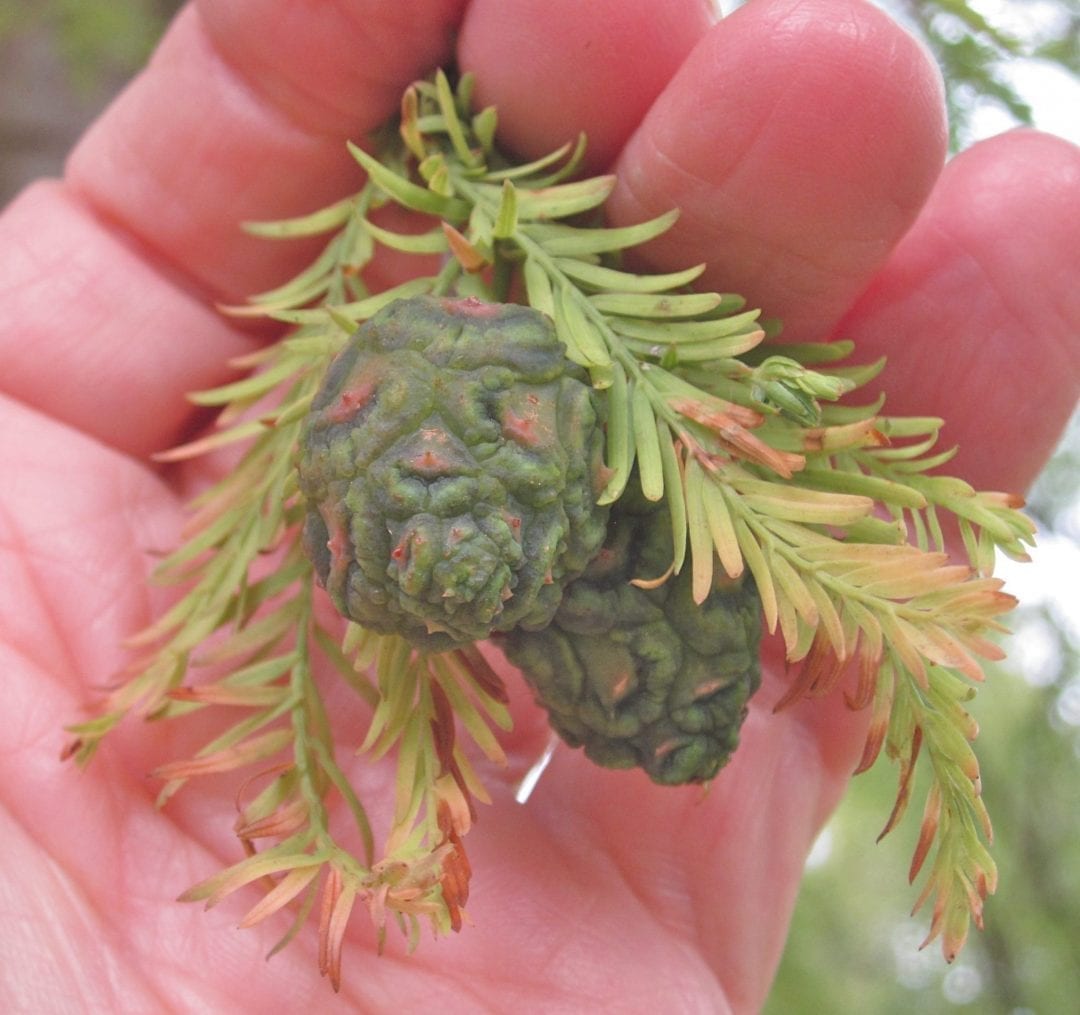
Dawn Redwood cone
The cones of the two conifers are quite different.  The first image shows cones of the Swamp Cypress in September. The second image shows an old cone of the Dawn Redwood on the ground after shedding seed. 
English and Sessile Oak

English and Sessile Oak

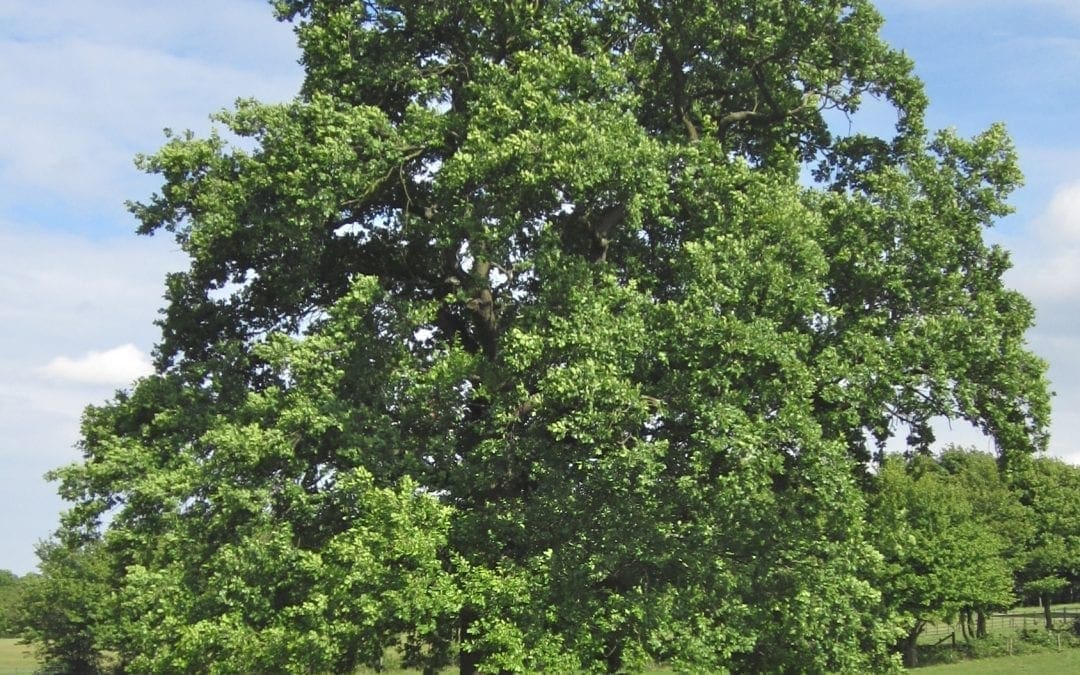
There are two native oaks in Britain, the English Oak and the Sessile Oak. They look similar but differ in two important ways. All images and text taken from the book Field Guide to the Trees of Britain and Europe published by Reed New Holland in 2017, author Alan Birkett and ISBN 9781921517839. 

English Oak tree in mid May

The English Oak is the dominant tree in most of Britain, particularly on the richer soils in valley bottoms. It has been planted everywhere in parks, gardens, deer parks and woods. he English Oak is also known as the Pedunculate Oak because its acorns have stalks (known as ‘peduncles’ by botanists).

sessile oak tree in midsummer

The Sessile Oak is also known as the Durmast Oak, a name that is possibly related to the feeding of pigs on acorn and beechnuts, known as ‘mast’. In Britain it is more common than the English Oak in upland areas in the North and West and is often found in woodlands on well-drained hillsides. The Sessile Oak gets its name from the fact that its acorns have no stalk, a feature that is known as ‘sessile’ by botanists.

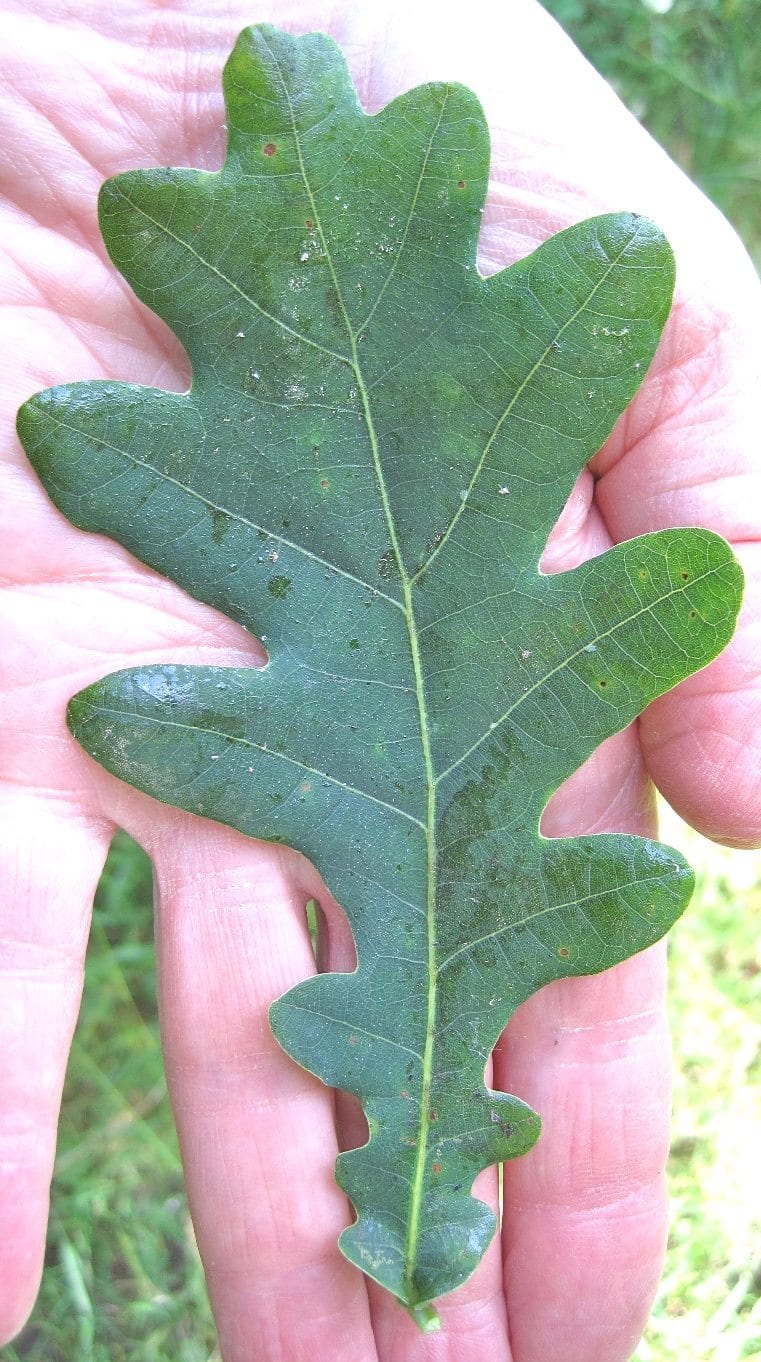
english oak leaf with ears and no stalk

The English Oak leaf  has a very short stalk, hidden by two small leaves known as “ears” at the base of the leaf.

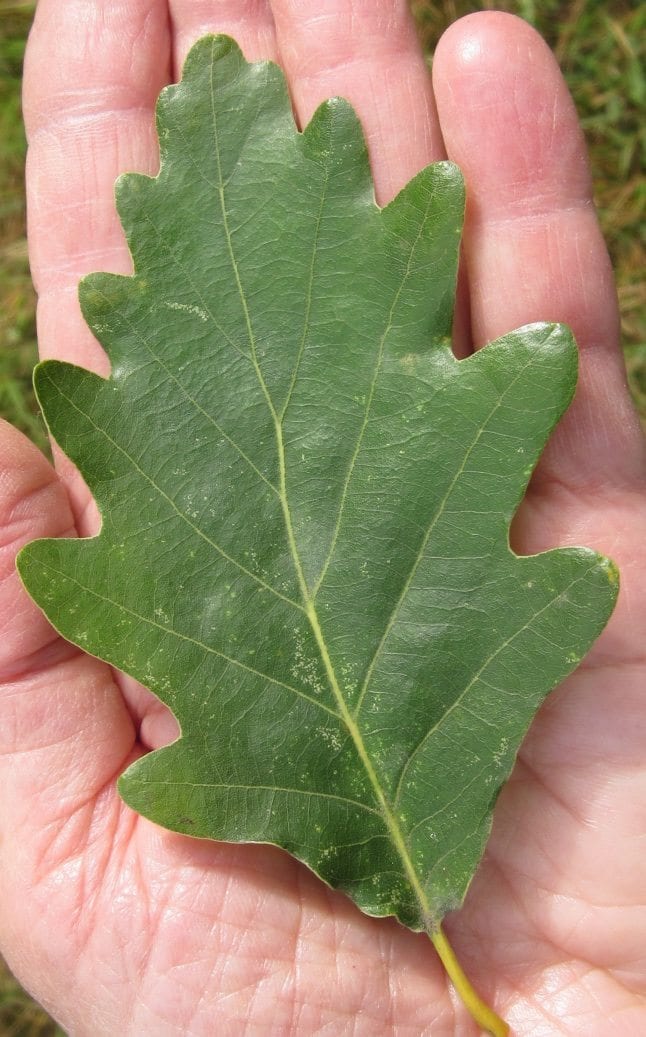
seesile oak leaf with long stalk

The  Sessile Oak leaf  has  a long stalk.

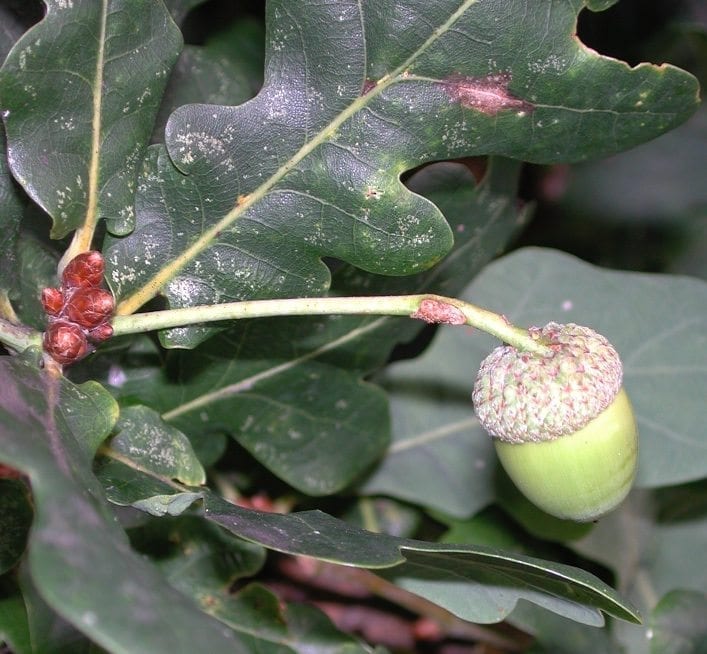
english oak acorn on a long stalk or peduncle

 An English Oak acorn, which is on a long stalk called a peduncle.

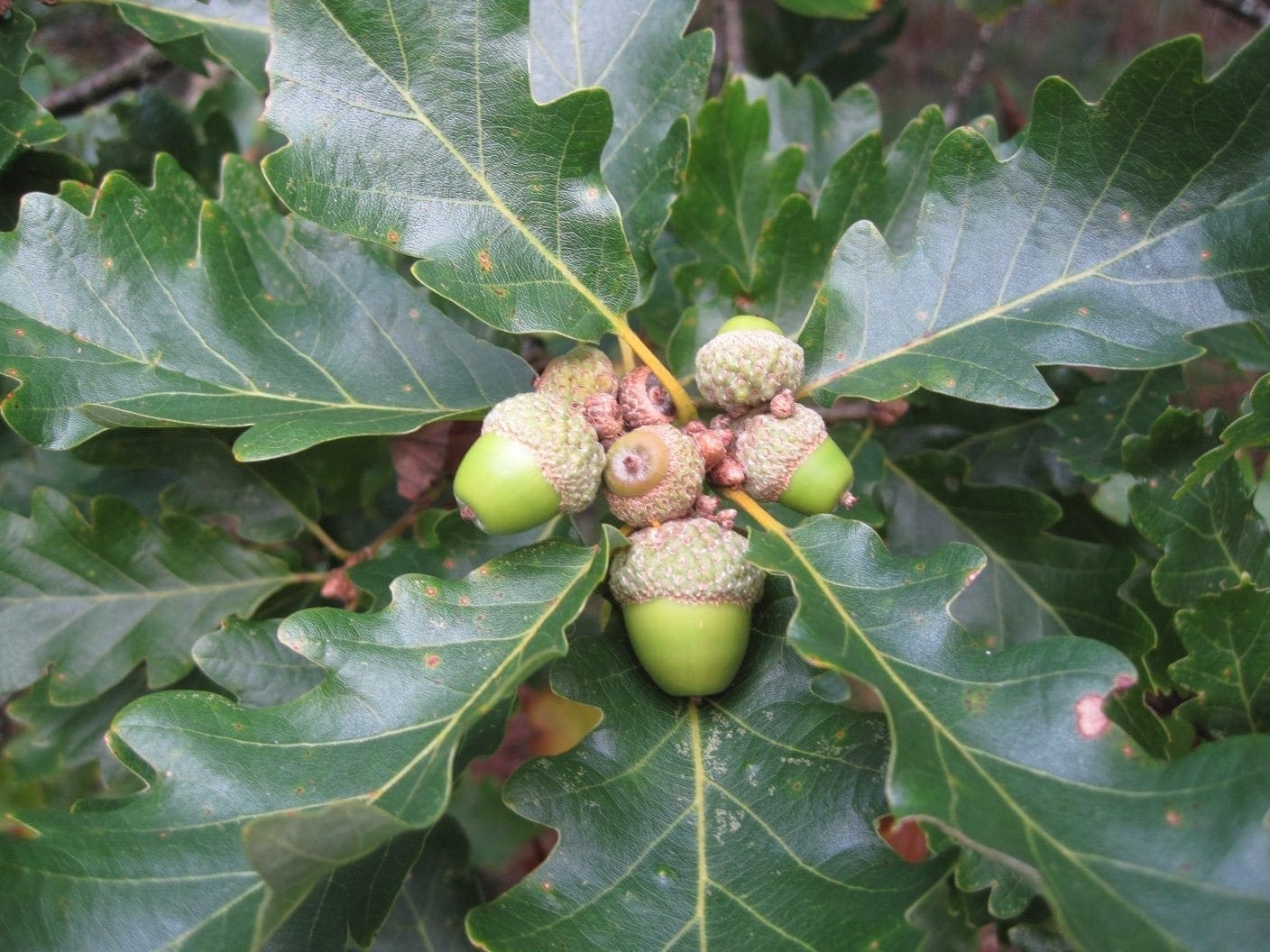
sessile oak acorns no stalk

Sessile Oak acorns have no stalk. They sit on the shoot like this – a feature that is known as ‘sessile’ by botanists.