February flowers

February flowers

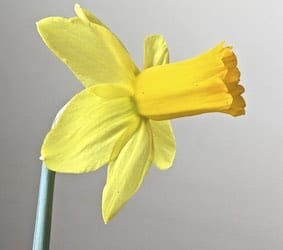
More flowers are out in February than in January. Early flowering Daffodils may already be in bloom. The wild daffodil Narcissus pseudonarcissus  grows in woods and grasslands throughout England and Wales and also in Germany, Portugal and Spain. Plant breeders have produced thousands of cultivars which are grown commercially in Britain, Holland, North America and Australia/New Zealand. Over 25,000 cultivated varieties are listed by the Royal Horticultural Society.

Two dwarf Irises are in flower, the early flowering Iris reticulata ‘Harmony’ and the Algerian Iris, shown below,  which flowers from winter to spring. Also out at this time of year are the Early Crocus, the Wallflower  ‘Bowles Mauve’ and the Heather cultivar ‘Ghost Hills’. 

daffodil February
Algerian Iris February

Algerian Iris Iris unguicularis flowers from winter to spring. It is native to Greece and North Africa. 


Early Crocus Crocus tommasinian

Early Crocus Crocus tommasinianus flowers in February and March. It is native to Eastern Europe and is planted in many gardens and parks in Britain. .

Wallflower ‘Bowles’s Mauve’ February

Wallflower Bowles’s Mauve’ Erysimum linifoliumBowles’s Mauve’ is a sterile, short-lived shrubby perennial.  It is one of the most popular cultivars and flowers from February to July.

Heather ‘Ghost Hills’ February

 Heather ‘Ghost Hills’ Erica x darleyensisGhost Hills is  a cultivated variety based on the  Bell Heather Erica cinerea, which grows on  dry Heaths and Moors. It is a popular garden plant that flowers from February to April.  

January Flowers – Hellebores

January Flowers – Hellebores

Few flowers are out in January but one early flowering plant is the Hellebore. Also out at this time of year are Snowdrops, Winter Aconite, Winter Jasmine, Lungworts and some Heathers. This post describes the main features of the hellebore.

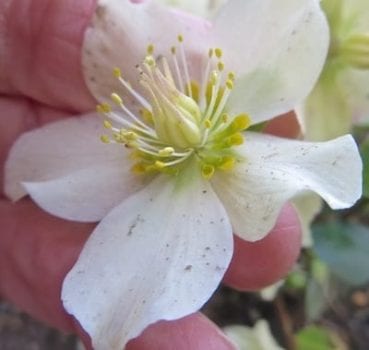
Hellebore flowers have 5 white/spotted or coloured sepals not petals. Inside the cup formed by the sepals are 10 green tube-shaped nectaries, which some botanists believe to be modified petals. Inside this are several rings of anthers and in the centre 5 green styles with receptive stigmas which open before the anthers (protogynous) release pollen. Pollinators are honey-bees and bumble-bees seeking nectar and pollen. Stigmas remain receptive if there are no insect visitors so self-pollination will occur as anthers release pollen.

hellebore hybrid flower

Lenten Rose Helleborus orientalis is a popular garden plant, native to Greece and Turkey. It flowers in February/March. Most Lenten Rose garden plants are hybrids (Helleborus x hybridus) and may have white, pink, green or purple flowers.

Hellebore niger Christmaas

Christmas Rose Helleborus niger is a popular garden plant native to the mountains of Switzerland, Germany and Eastern Europe. It flowers in January and February. It has 5  white sepals with no spots, 10 yellow nectaries, many yellow anthers and 5 carpels with stigma-tipped styles. It is pollinated in its native habitat by bees and flies. It is protogynous with stigmas receptive before pollen release.

Hellebore flowers have 5 white/spotted or coloured sepals not petals. Inside the cup formed by the sepals are 10 green tube-shaped nectaries, which some botanists believe to be modified petals. Inside this are several rings of anthers and in the centre 5 green styles with receptive stigmas which open before the anthers (protogynous) release pollen. Pollinators are honey-bees and bumble-bees seeking nectar and pollen. Stigmas remain receptive if there are no insect visitors so self-pollination will occur as anthers release pollen.

hellebore carpels

The 5 carpels (ovaries plus styles) become 5 separate fruits.The carpels sit on the receptacle so the ovaries are superior. Each carpel becomes a fruit called a follicle,

Summer Fruit

Summer Fruit

Summer fruit that you may be lucky enough to see in the countryside at this time of the year in the UK

The Cherry Plum is also known as the Myrobalan Plum. It is native to a region from the Balkans to central Asia and has been cultivated in Britain from the 16th century. The word ‘Myrobalan’ was originally used for the sharp-tasting fruit of an Asian tree before it was applied to this plum.The plum is yellow or red and can be eaten raw or used in cooking. It is a small tree and is frequently planted in urban areas because it is one of the first trees to come into flower in the spring. It is also planted widely in hedgerows. Photograph taken in late July.

The Blackthorn is a small thorny tree or shrub, usually found in farm hedgerows, but often planted in urban areas. The fruit is called a ‘sloe’ and can be used to make wines, jam and the liqueur, sloe gin. The Black and Brown Hairstreak butterflies lay their eggs on Blackthorn thorns in summer.

The Elder is a shrub or small tree which grows in hedgerows and woods throughout Britain. It is also native to Europe, North Africa and south west Asia. The fruit is used to make wine and has many medicinal uses, but the seeds and other plant parts are toxic.

This is the fruit of the Bramble, the Blackberry. Rubus is a genus of 250 plants which includes two native wildflowers, the upright Raspberry rubus idaeus and the scrambling Bramble Rubus fruticosus.  Botanically the Blackberry is an aggregate fruit, composed of small drupelets attached to a central elongated receptacle. The hypanthium is flat and the receptacle is fleshy and comes away when the fruit is picked. Raspberry fruit is red when ripe and the receptacle does not come away when the fruit is picked.

Tree of Heaven

Tree of Heaven

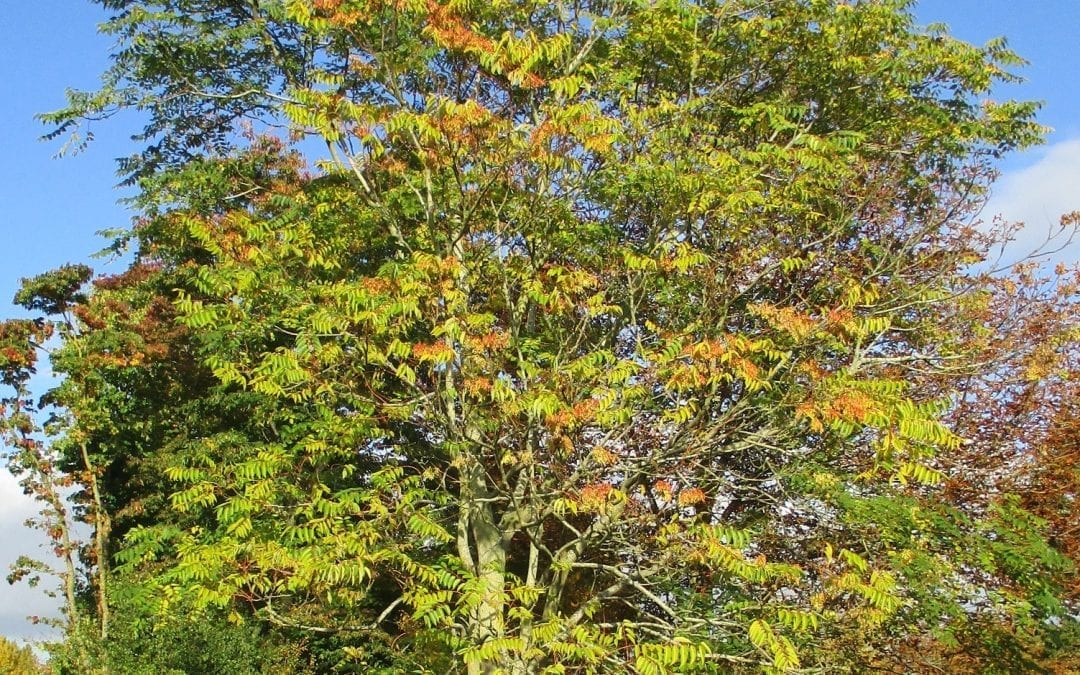
The Tree of Heaven Ailanthus altissima, native to northern and central China, was introduced to Britain in 1751. It was planted extensively in London Squares and elsewhere in parks, streets and gardens. It is now very common in urban areas and has spread naturally in the warmer parts of the USA by colonising waste ground. The leaves have a characteristic bad odour when crushed. At first sight the tree looks like an Ash but closer examination of the leaves shows the difference.

A Tree of Heaven in full leaf in August.

A Tree of Heaven in late October.

Each leaf has 11 to 25 leaflets. It is a pinnate leaf. At first sight the leaf looks like that of the Common Ash. Click HERE for a photo of a Common Ash leaf. May also be confused with the pinnate leaf of the Stag’s horn Sumach but its leaves are toothed.

Each leaflet is smooth-edged but has a single tooth at the base of the leaf.

The male flowers come out in July.


The fruit hangs, in the form of keys, like this in October. They look like Common Ash keys except for their colour.

The bark has vertical “snakes” like this

Three unusual Lime Trees

Three unusual Lime Trees

There are three unusual Lime trees that are found in Britain, Mongolian Lime, Henry’s Lime and Oliver’s Lime.

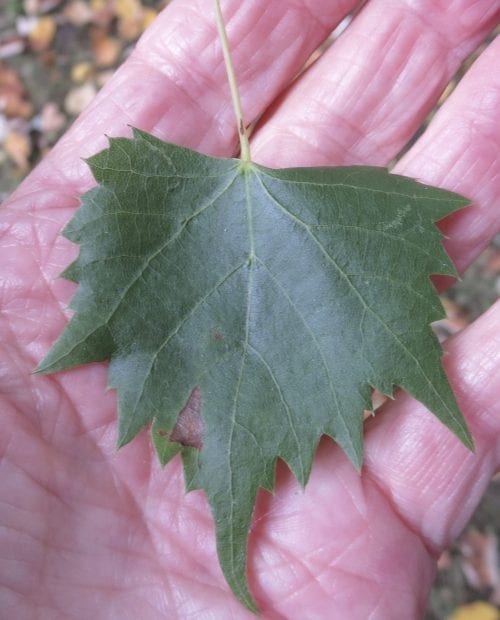
The Mongolian Lime Tilia mongolica is a small tree native to eastern Russia, Mongolia and northern China. It was introduced to Britain in the 1880s. It has a very distinctive, attractive, leaf and is slow growing, so it is being used increasingly in town and city parks. The leaves turn yellow in autumn.

Mongolian Lime leaf
Mongolian Lime leaf

Henry’s Lime Tilia henryana is a medium-sized tree native to central China It was discovered in China by Augustine Henry, an Irish plantsman, and introduced to Britain in 1901. It has beautiful leaves with long yellow-tipped teeth but until recently has only been planted in a few gardens. In Europe it tends to be slow growing and so most trees are small.

Henry's Lime leaf
Henry's Lime leaf

Oliver’s Lime Tilia oliveri is native to central China. It was named after Daniel Oliver a former Keeper of the Kew Herbarium when it was introduced to Britain in 1900 by E.H.Wilson, the plant collector. It is a medium sized tree with elegant leaves that are silvery underneath. It is a beautiful tree but is only found in a few collections.

Oliver's Lime leaf
Oliver's Lime leaf
Mulberries

Mulberries

Mulberry tree identification test edit

The Black Mulberry Morus nigra, native to south-west Asia, was probably introduced about 1500. It has been cultivated for centuries for its edible fruit and has been planted in many cottage gardens, formal gardens and parks. The fruit of the Black Mulberry is sweet and juicy in late summer.

The White Mulberry Morus alba, native to China, was introduced to Britain in the 16th century. It is the favourite food plant of the silkworm and is cultivated on a large scale in China and other parts of the World. It is rare in Britain but is found in a few gardens in the warmer areas.

Mulberry tree identification – Black Mulberry and White Mulberry – tree shape, leaf shape and fruit colour in summer and autumn

Black Mulberry

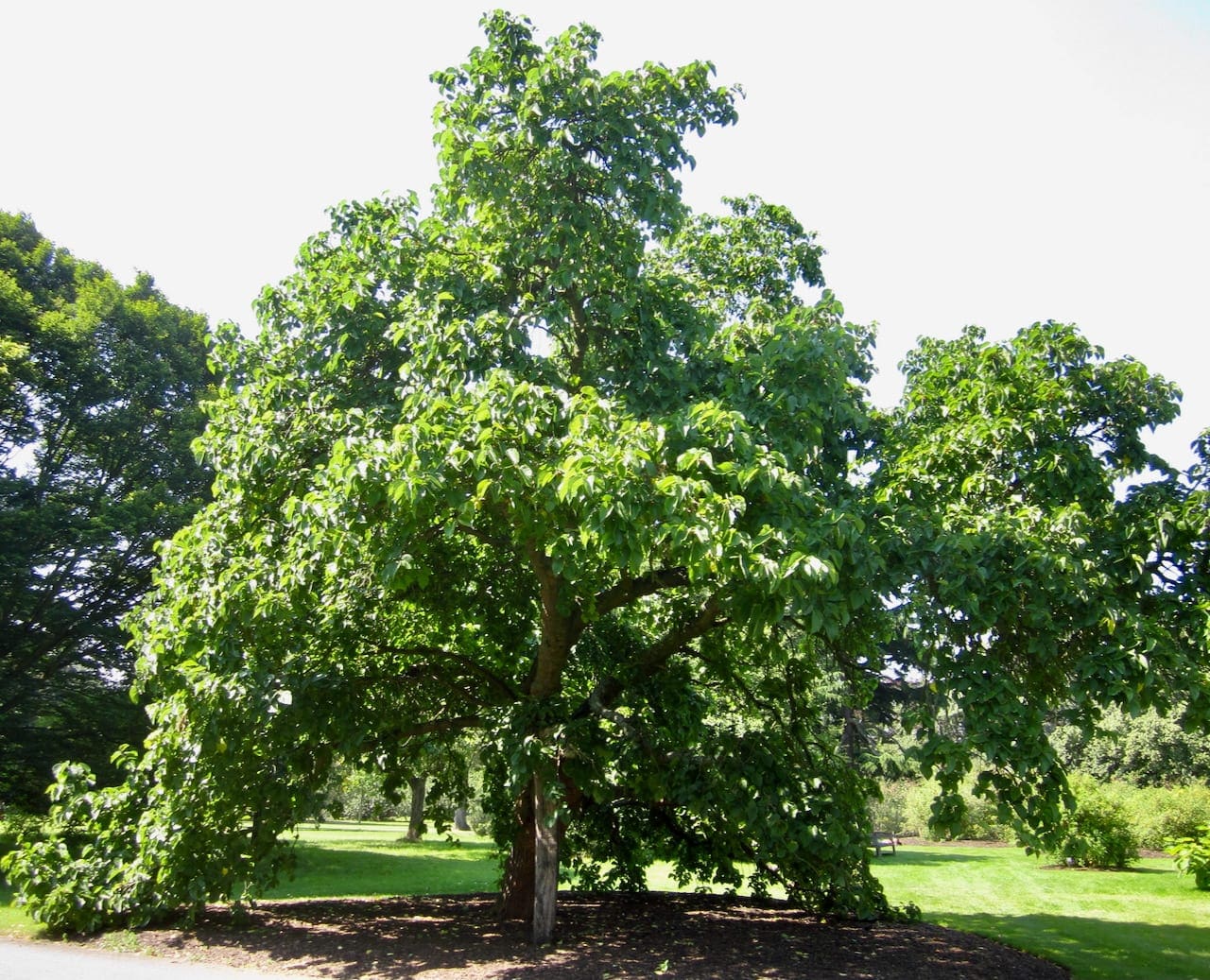
Black Mulberry tree

Black Mulberry tree in July. The tree often has a twisted trunk and is low-growing. Its barks deep ridges.

Black Mulberry leaf

The leaf is large and heart shaped. The underside of the leaf is hairy

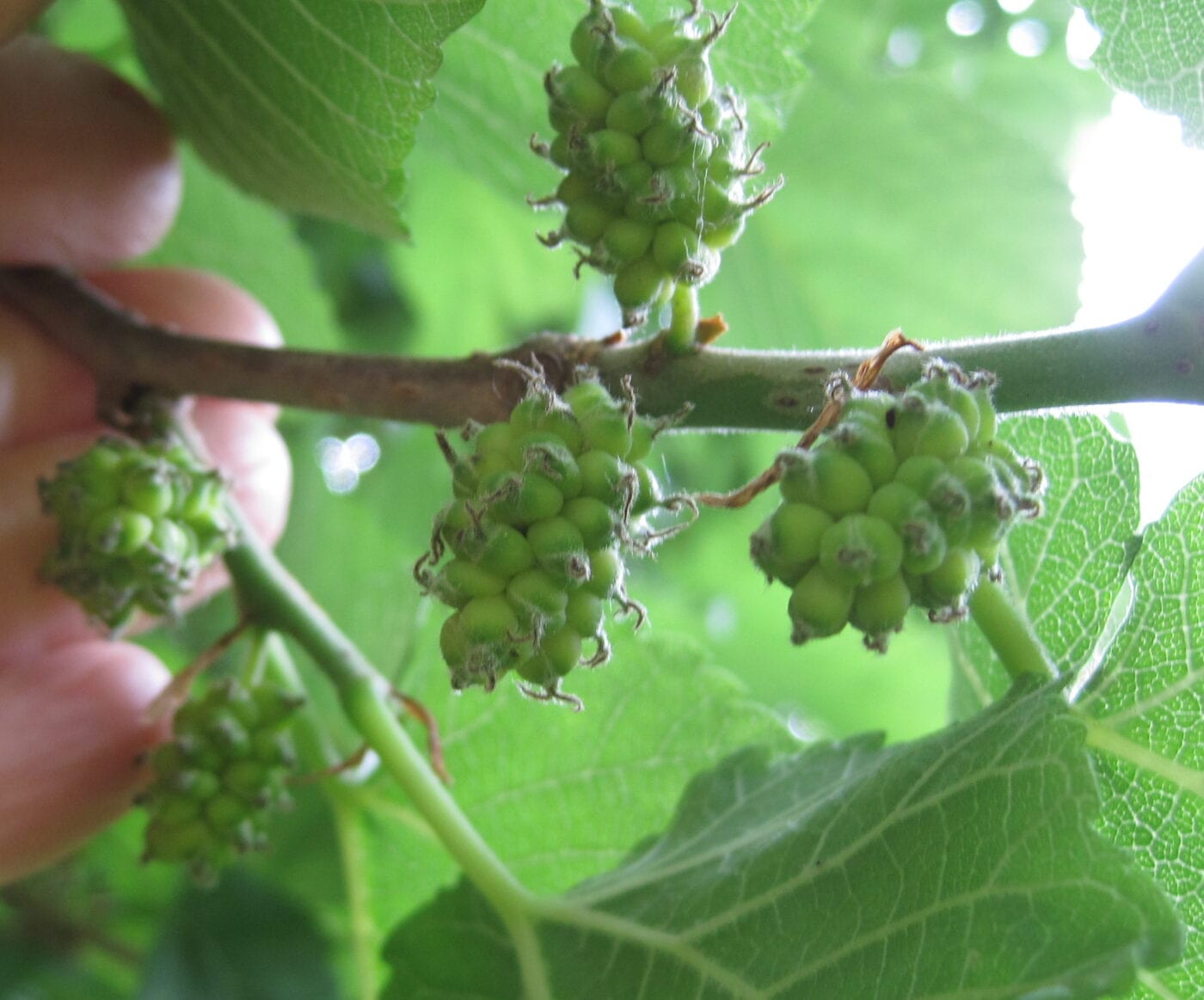
Black Mulberry female flower clusters

Five green female flower clusters in early July. Each cluster consists of a spike of flowers.  Individual flowers a style with a pair of stigmas on the end. Green male flowers are in the form of catkins.  Pollination occurs when the stigmas collect male pollen floating in the wind but female trees can produce fruit without pollination.

Black Mulberry fruit

The fruit turns red at the end of July and is black by August or September.This type of fruit is known as a multiple fruit because it consists of a number of drupes fused together to make one big fruit.

White Mulberry

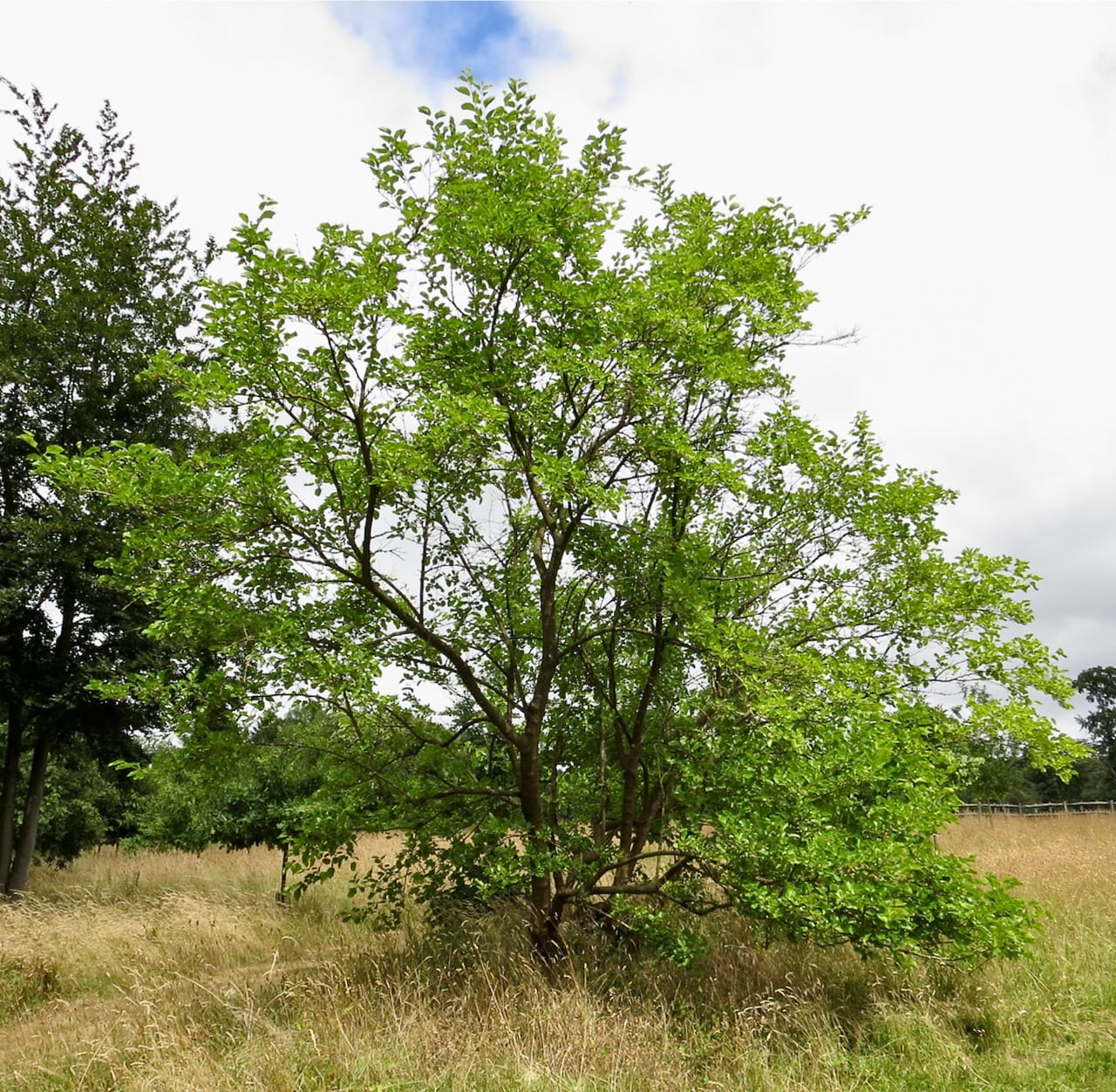
White Mulberry tree

White Mulberry tree in July. It is an upright tree with a Willow-like trunk.

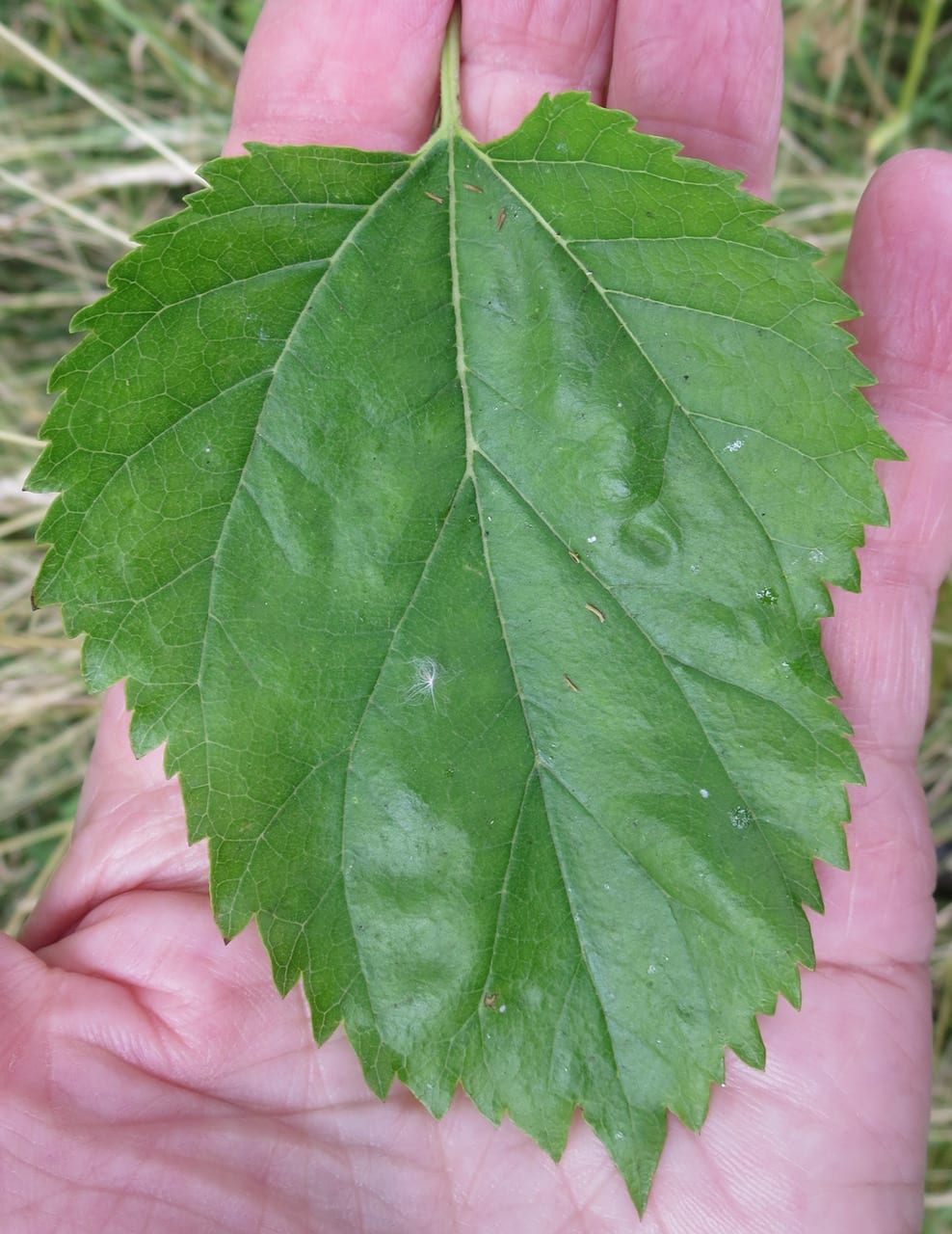
White Mulberry leaf

Most leaves are heart shaped but some have lobes. The leaves are used to feed silkworms.

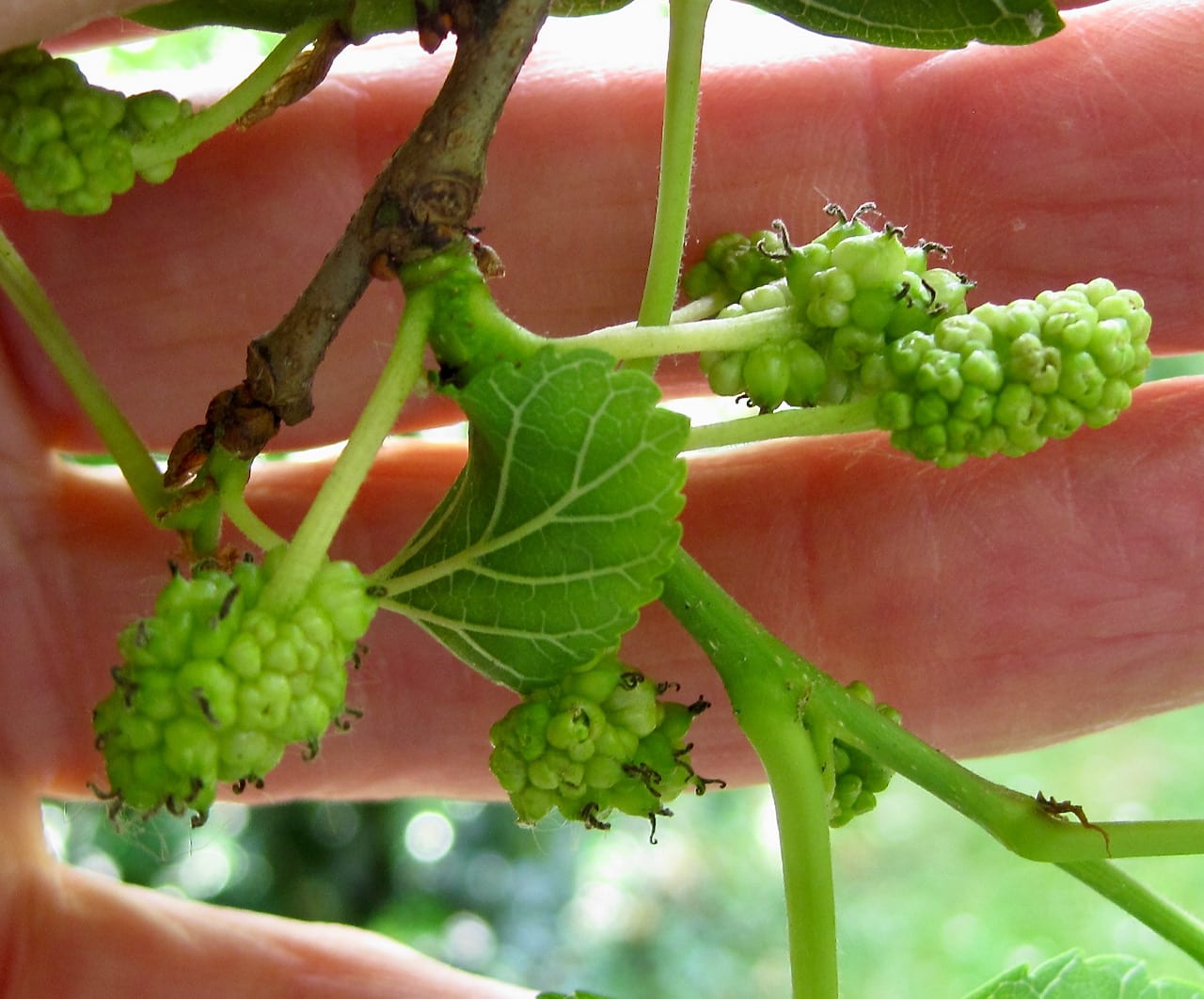
White Mulberry female flower clusters

Female flower clusters in June

White Mulberry fruit

The flowers produce fruit in July which changes from white through purple